


Find out more about our products
Telephone:
+44 (0) 28 9752 1754
Email:
info@tecdur.com
Tecdur Secure Glass is a range of enhanced security glass engineered to withstand severe levels of manual attack
If you are interested or wish to know more on Secure Glass, please fill out the form and we will come back to you.
Security glazing is often the first line of defence to protect high value goods and property or to prevent escape or self-harm in a secure institution. Tecdur Secure Glass has become the leading brand of security glass in UK an Ireland, recognised for performance and technical know-how. We work with you to specify appropriate anti bandit glass to EN356 or enhanced security glass to LPS1270.
Our usual applications include:
High value retail or commercial
VIP protection
Prisons and Police custody suites
Mental health establishments
High security facilities
High value commercial/retail
Security doors
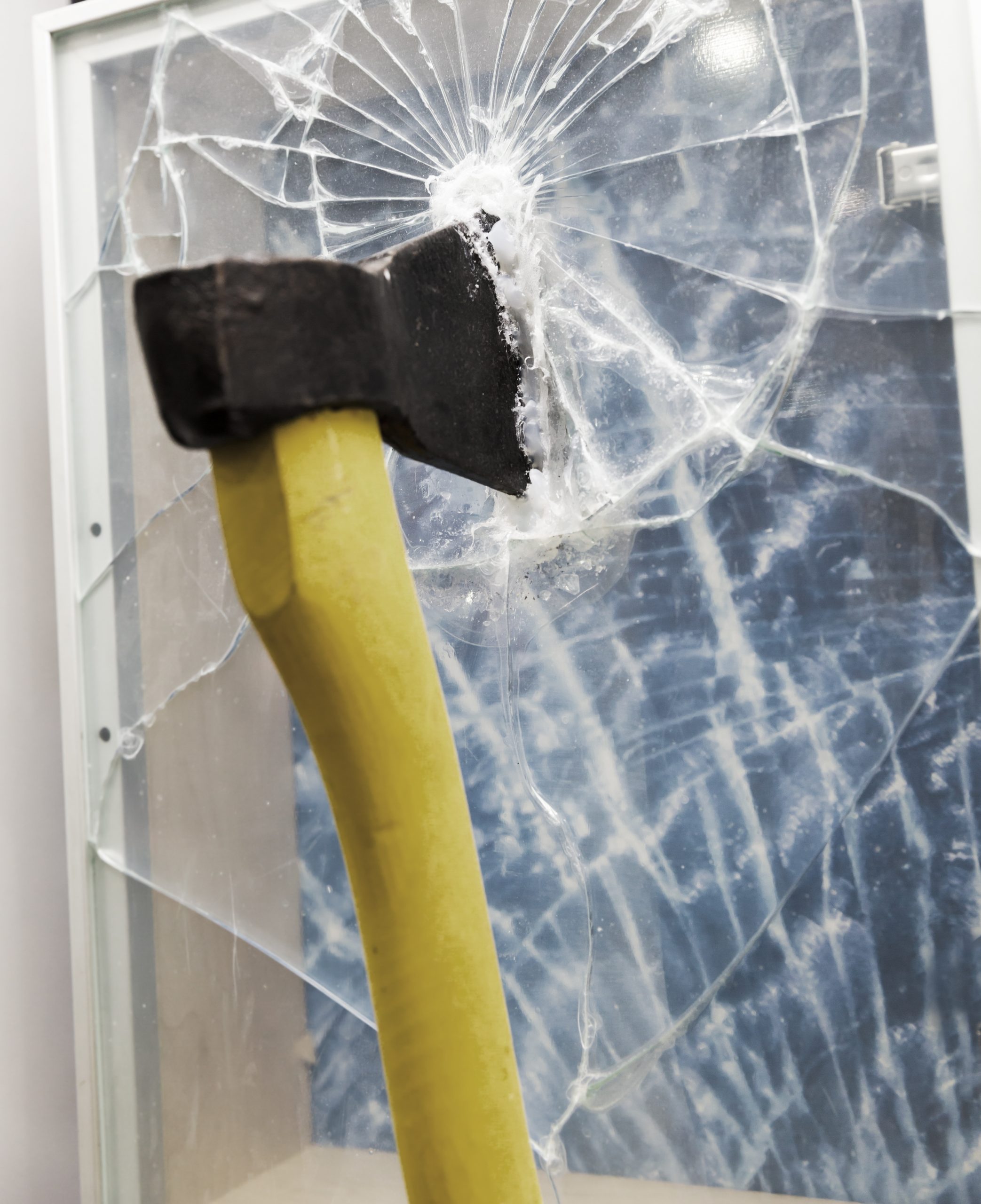
Tecdur Secure Glass has been rigorously tested and certified to EN 356 [ P1A – P5A, P6B, P7B and P8B ] and LPS 1270 [ SR1, SR2, SR3, SR4, SR5 and SR6 ].
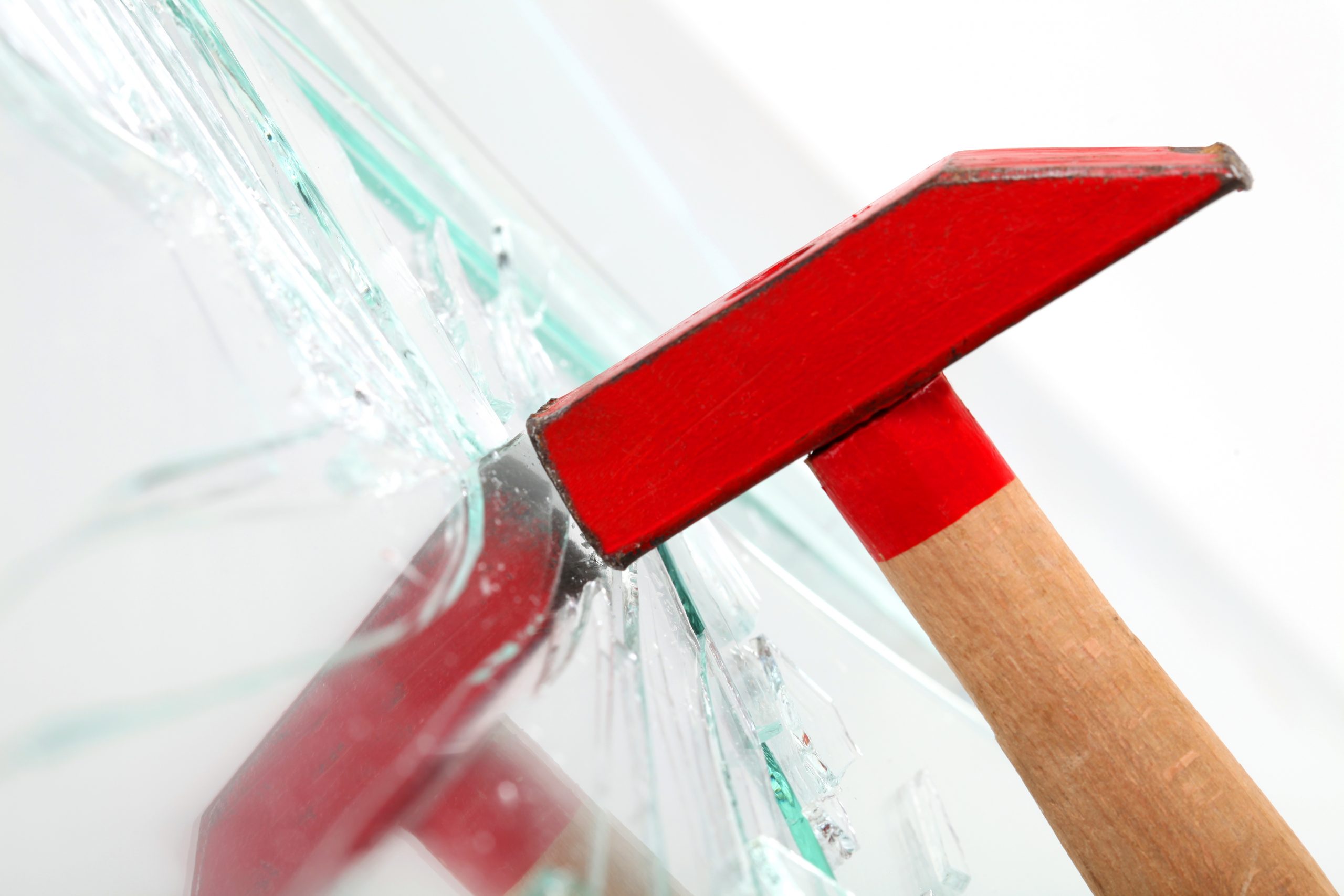
EN 356 certified glass is generally referred to as anti-bandit glass. Testing in the low levels – P1A, P2A, P3A, P4A and P5A – uses a series of large steel ball drops. EN356 P6B, P7B and P8B requires the glass to withstand multiple strikes from an axe. If the glass can withstand 30-50 axe strikes before creating an aperture, P6B is achieved. If the number of strikes is between 51-70, P7B is achieved and over 70 achieves P8B.
Tecdur Secure Glass is also certified to the LPS 1270 standard for security glazing. LPS 1270 was created by the Loss Prevention Certification Board following consultation with Police and Insurers. The standard is designed to simulate a more ‘realistic’ set of manual attack tests. The LPS 1270 classification system rates a piece of glass with a three-digit code, e.g. LPS 1270 1.1.2. Each digit describes the glasses resistance to the creation of different sized holes made a series of tools used for increasing the length of time – up to 10 minutes.
The first digit indicates how long and with what tools it takes to create a hole in the glass big enough to pass a piece of wire through to potentially open a handle or lock. The second digit is determined by how long and with what tools it takes to create a hole big enough to get a hand through the window to operate a handle or lock. The third digit involves the creation of a space large enough to fit a human torso through. To maintain this onerous certification we undergo regular audits to ensure that our products and processes conform to the standard’s strict requirements.
With over 15 years’ industry experience and extensive in-house manufacturing capabilities, our customers recognise our track record to provide consistently high- quality cost-effective security glass. We also appreciate that in order to meet modern design requirements, projects often require increasingly advanced glass systems. Tecdur Secure Glass can be enhanced to provide additional performance benefits such as switchable privacy, sound reduction, ballistic resistance [EN 1063], fire resistance [Exova, CertiFire] and blast resistance.
Tecdur Secure Glass is a high-performance laminated glass range engineered to protect people and property.
Please visit our portfolio for a look at completed projects. Keep up to date on our LinkedIn Showcase page


Enhance Security

Impact Resistant

Bullet Resistant

Blast Resistant

Fire Resistant

Acoustic
Privacy
EN 356 is typically used for retail, commercial and general security applications where protection against smash-and-grab or forced entry is required, while LPS 1270 is specified for higher-risk environments such as prisons, police custody suites, mental health facilities, VIP protection and high-security buildings. Tecdur works with customers to specify the correct standard and rating based on risk level, regulatory requirements and project needs.
LPS 1270 is a UK security glazing standard developed by the Loss Prevention Certification Board following consultation with police forces and insurers. It is designed to simulate more realistic manual attack scenarios using a wide range of tools over timed periods of up to 10 minutes. Glass is classified using a three-digit code that measures resistance to creating progressively larger openings, from a small hole to pass a wire through, to a hand-sized opening, and finally an aperture large enough for a human torso. LPS 1270 certification is particularly important for high-security environments where prolonged and determined attack is a risk. Tecdur Secure Glass is certified to LPS 1270 SR1 through SR6 and is subject to ongoing audits by the Loss Prevention Certification Board to maintain compliance.
EN 356 is a European standard for security glazing, commonly known as anti-bandit glass. It measures a glass panel’s resistance to manual attack. Lower ratings from P1A to P5A are tested using repeated steel ball drops to simulate impact and forced entry attempts, while higher ratings P6B, P7B and P8B are tested using repeated axe strikes. P6B requires the glass to withstand 30 to 50 axe strikes before an opening is created, P7B withstands 51 to 70 strikes, and P8B withstands more than 70 strikes. EN 356 ratings help customers choose the correct level of protection for high-value retail, commercial buildings and secure environments. Tecdur Secure Glass is certified across the full EN 356 range to ensure proven resistance to attack.
Tecdur Secure Glass is an enhanced security glazing solution engineered to resist severe manual attacks. It is widely used to protect high-value assets, prevent break-ins, and ensure safety in high-security facilities.
Tecdur Secure Glass is certified to EN 356 and LPS 1270 standards. EN 356 certification (P1A to P8B) assesses the glass’s resistance to various impact levels, while LPS 1270 certification (SR1 to SR6) evaluates its performance under realistic manual attack scenarios.
EN 356 anti-bandit glass is a classification for glass resistant to impacts, such as those from heavy objects like steel balls or axes. The highest levels (P6B to P8B) require the glass to withstand numerous axe strikes, making it highly resistant to forced entry.
LPS 1270 glass undergoes rigorous testing that simulates real-world attack scenarios. The classification (e.g., LPS 1270 1.1.2) measures the glass's resistance to hole creation, using different tools and time intervals, to assess its ability to withstand various breaches.
Typical applications include high-value retail and commercial properties, VIP protection, prisons, police custody suites, mental health facilities, and high-security installations. It’s also used in security doors and windows for areas requiring high levels of protection.
The three-digit code specifies the glass’s resistance level for creating holes of different sizes. The first digit rates resistance to small holes (sufficient for wire access), the second for hand-sized openings, and the third for larger apertures big enough for a human torso.
A range of tools simulating real-life break-in attempts are used in LPS 1270 testing. These include hammers, chisels, and other tools, progressively increasing in force to assess the glass’s durability against realistic attacks.
Tecdur Secure Glass is tested to endure attacks for extended periods, up to 10 minutes, depending on the certification level. Higher LPS 1270 ratings correspond to increased resistance times, making it challenging for intruders to breach the glass.
In mental health establishments, Tecdur Secure Glass provides both security and safety by preventing unauthorized exits and protecting individuals from harm. Its durability and anti-bandit features make it suitable for such sensitive environments.
Yes, Tecdur Secure Glass can be tailored to meet the requirements of various high-security applications. Tecdur’s team works closely with clients to ensure the chosen glass matches specific security needs, whether for retail, government, or secure facilities.
Tecdur Secure Glass is designed to be low maintenance; however, regular cleaning and periodic inspections are recommended to ensure long-term durability and effectiveness in high-security environments.