


Find out more about our products
Telephone:
+44 (0) 28 9752 1754
Email:
info@tecdur.com
If you are interested or wish to know more on Display Secure Glass, please fill out the form and we will come back to you.
Our display case glass range provides impact resistance and is manufactured from glass-polymer composites engineered to withstand very high levels of sustained manual attack. Tecdur Display Secure can be manufactured as single side glass clad, dual side clad, double glazed or multi-ply.
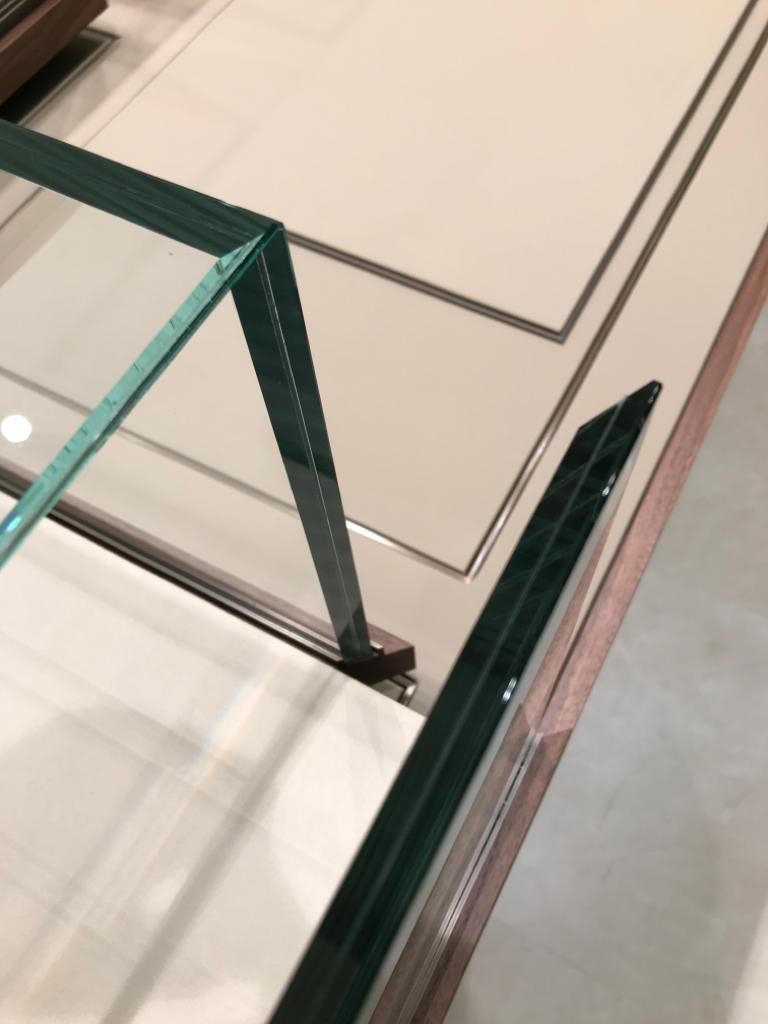
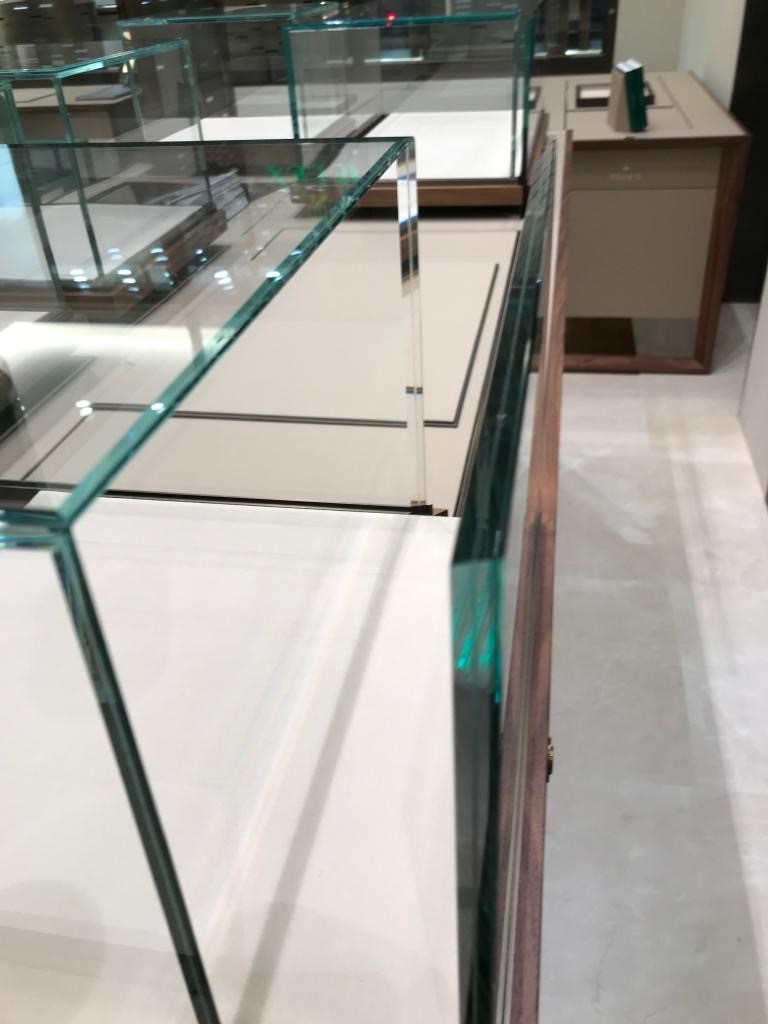

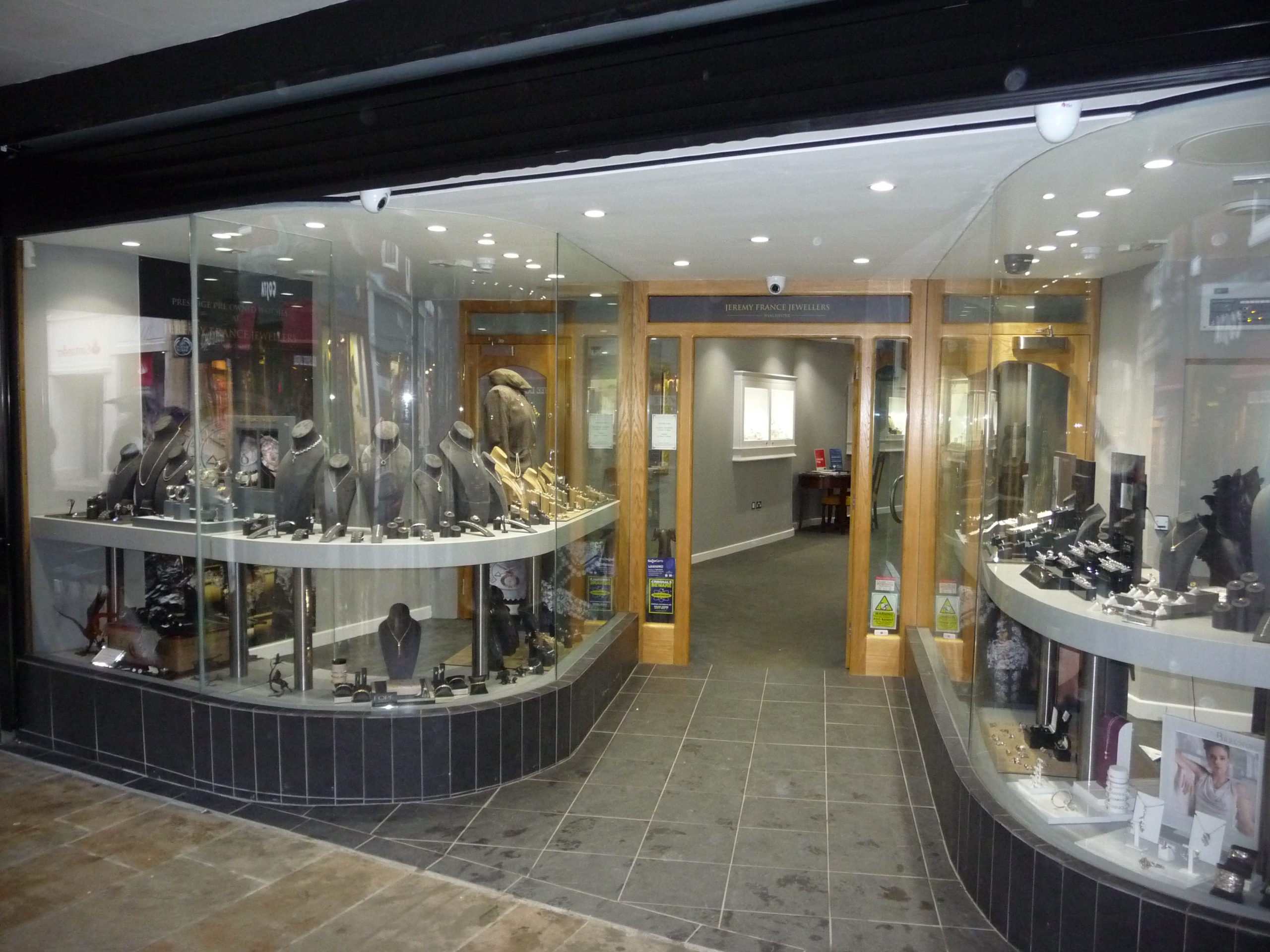
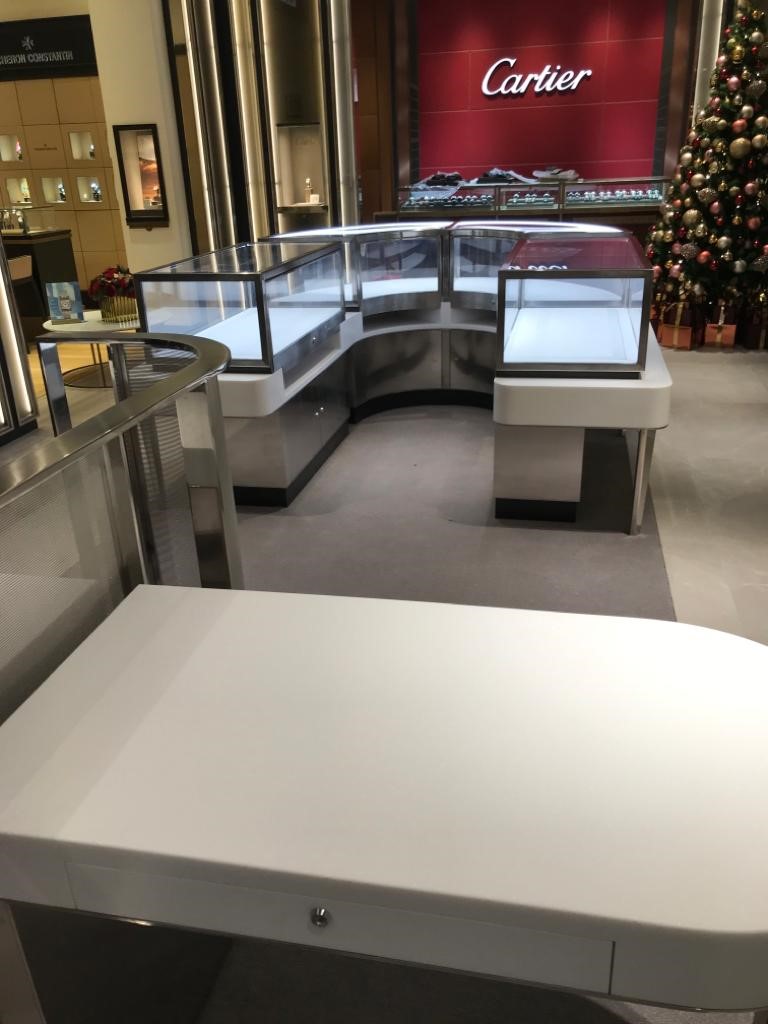
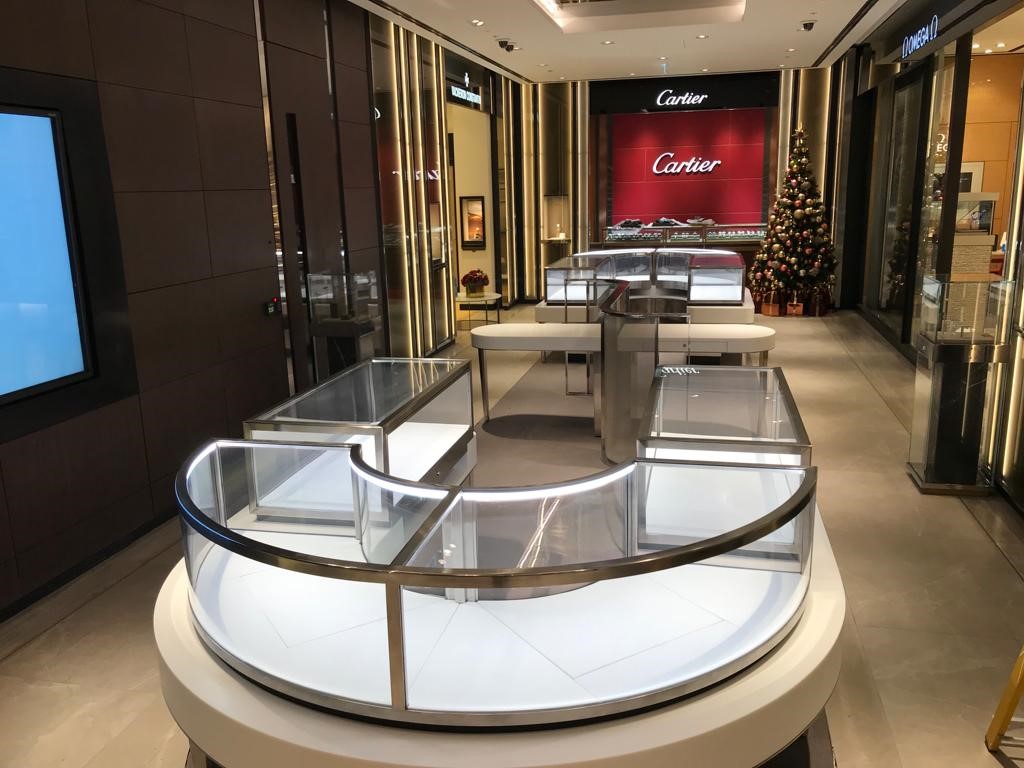
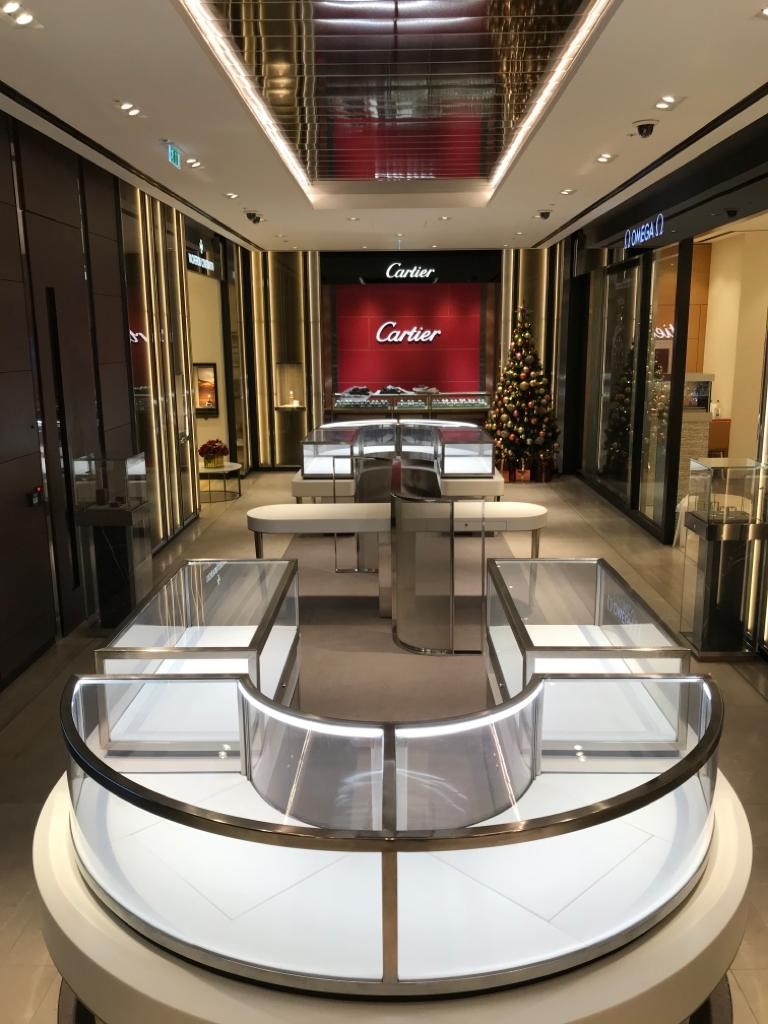
Glazing is often the first line of defence against intrusion. Smash and grab crime has steadily increased in recent years and costs UK businesses £millions each year. Therefore, display glazing needs to be able to protect property from physical attack. The composition and thickness of glass constructions are threat specific. Tecdur Display Secure helps counteract the evolving threat levels associated with sustained manual attack. Thus whether it is for a jewellery display or a temporary art installation, our display glass has been accredited to the EN 356 [P6B-P8B] and LPS 1270 [SR1-SR6] standards for attack resistant glazing. EN 356 testing requires that products demonstrate performance in withstanding high impact strikes.
The standard consists of 8 levels [P1A-P8B]. EN 356 levels P1A-P8B testing involves dropping a steel ball from increasing height onto the glass surface. Whereas EN 356 P6B-P8B requires a product to withstand multiple strikes from a mechanical axe which is designed to simulate the types of strikes associated with deliberate and organised attack. The P6B-P8B test itself involves impacting the glass with a hammer at least 12 times in order to break the glass surface before attempting to cut a 400×400 square aperture by repeated impacts from a mechanical axe. If the glass can withstand up to 30-50 axe strikes before creating an aperture, P6B will be achieved. If the number of strikes is between 51-70, P7B will be achieved and over 70 will achieve P8B.
Our display case glass has also achieved certification to the LPS 1270 standard for intruder resistant glazing. LPS 1270 was created by the Loss Prevention Certification Board following consultation with Police and Insurers. The standard is designed to simulate a more ‘realistic’ set of manual attack tests. The LPS 1270 classification system rates a piece of glass with a three-digit code, e.g. LPS 1270 1.1.2. Each digit describes the glasses resistance to the creation of different sized holes made a series of tools used for increasing the length of time – up to 10 minutes. The first digit indicates how long and with what tools it takes to create a hole in the glass big enough to pass a piece of wire through to potentially open a handle or lock. The second digit is determined by how long and with what tools it takes to create a hole big enough to get a hand through the window to operate a handle or lock. The third digit involves the creation of a space large enough to fit a human torso through. To maintain this onerous certification we undergo regular audits to ensure that our products and processes conform to the standard’s strict requirements.
Applications include:


Enhanced Security

Impact Resistant

Privacy
Tecdur Display Secure glass is certified to recognised security standards that measure resistance to smash and grab and sustained manual attack. The main standards used are EN 356 for anti-bandit glass and LPS 1270 for intruder resistant glazing. These codes confirm that the display glass has been independently tested to withstand deliberate physical attack over defined conditions and time periods.
EN 356 is a European standard for attack resistant glazing, commonly referred to as anti-bandit glass. It measures how well glass can resist impact and manual attack. The standard ranges from P1A to P8B, with higher ratings providing greater resistance. Tecdur Display Secure is certified to EN 356 P6B, P7B and P8B, which are the highest levels intended to protect against organised smash and grab attacks using tools such as hammers and axes.
EN 356 P6B, P7B and P8B ratings are achieved through axe attack testing. The glass must withstand repeated impacts before an opening large enough for entry can be created. P6B means the glass can resist approximately 30 to 50 axe strikes, P7B resists 51 to 70 strikes, and P8B resists more than 70 strikes. These ratings are typically specified for jewellery displays, high-value retail counters, museums and secure display cases.
LPS 1270 is a UK standard for intruder resistant glazing developed by the Loss Prevention Certification Board in consultation with police and insurers. It is designed to simulate more realistic manual attack scenarios using a range of tools over timed periods of up to 10 minutes. LPS 1270 is often specified where there is a high risk of determined and sustained attack.
LPS 1270 uses a three-digit classification to describe resistance to creating progressively larger openings in the glass. The first digit relates to creating a small hole to pass a wire through, the second digit relates to creating a hand-sized opening, and the third digit relates to creating an aperture large enough for a human torso. Each stage is tested using increasing tool severity and time. Tecdur Display Secure is certified across LPS 1270 SR1 to SR6 classifications, depending on specification.
Security codes such as EN 356 and LPS 1270 allow customers, insurers and specifiers to verify that display glass offers proven protection against smash and grab crime. Correctly rated display glazing helps protect high-value items, reduce loss, support insurance requirements and deter opportunistic and organised theft.