


Types of Security Glass
Understanding the different types of security glass and how to select the right level of protection for your project.
There are several types of security glass, each engineered to resist impact, forced entry or deliberate attack.
The correct specification depends on the level of threat, building use and compliance requirements.
As experienced security glass manufacturers in the UK, Tecdur designs and manufactures high-performance laminated secure glazing
tested to recognised standards including EN 356 and LPS 1270. Our Secure Glass range is engineered to withstand severe levels of manual attack
while maintaining clarity and design flexibility.
1. Laminated Security Glass
Laminated glass is the foundation of most security glazing systems.
It consists of two or more layers of glass bonded with high-strength interlayers.
When impacted, the interlayer holds the fragments together, preventing an immediate opening.
Laminated security glass can be manufactured to different certification levels depending on thickness and construction.
It is widely used in retail, commercial and secure institutional environments.
2. Anti-Bandit Glass (EN 356)
Anti-bandit glass is certified to EN 356 and classified from P1A to P8B.
Lower levels (P1A to P5A) are tested using repeated steel ball drops,
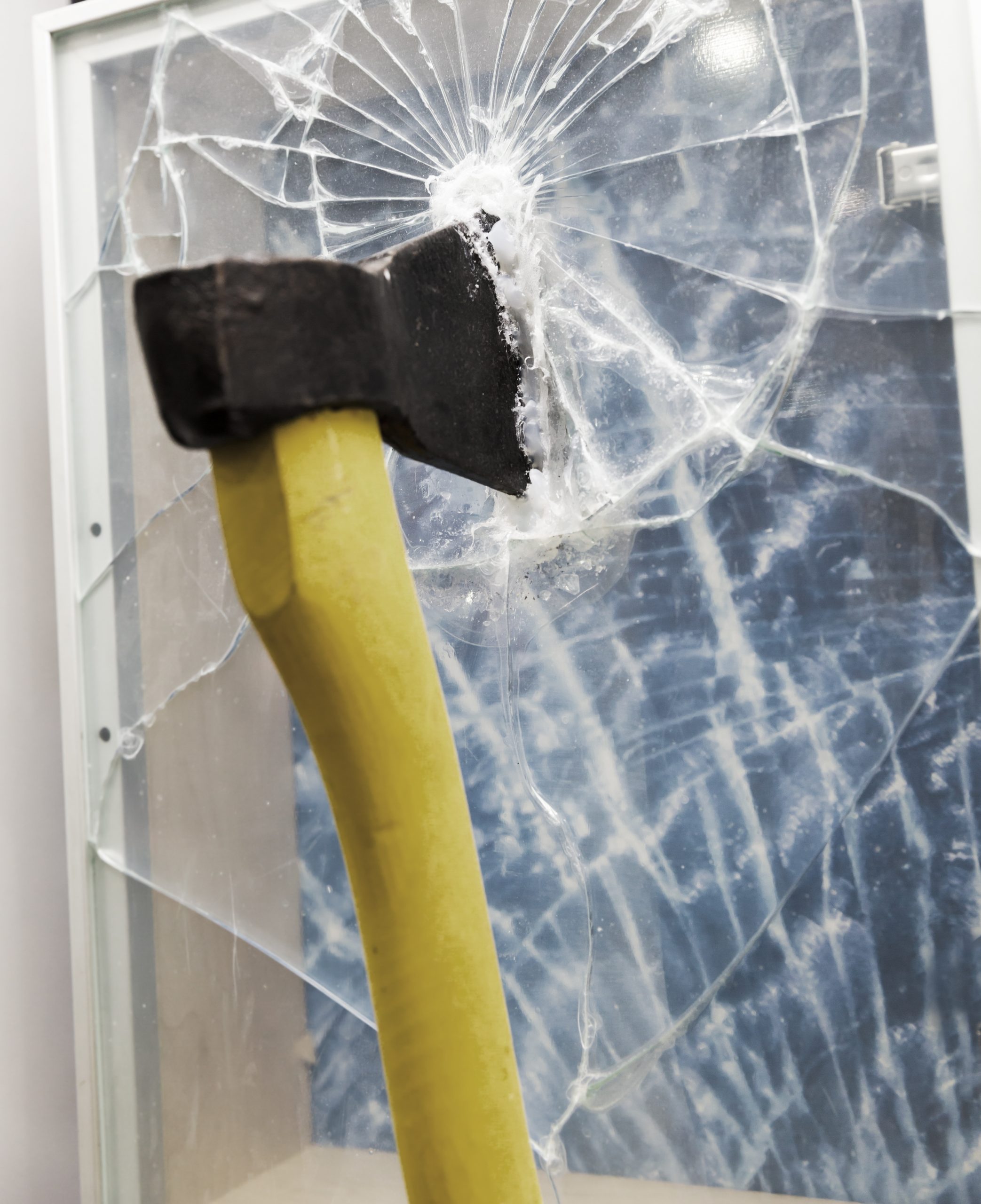
while higher levels (P6B to P8B) must withstand multiple axe strikes before an aperture can be formed.
- P1A to P5A – protection against opportunistic attack
- P6B to P8B – resistance to sustained heavy manual attack
3. LPS 1270 Certified Security Glass
LPS 1270 security glazing was developed by the Loss Prevention Certification Board in consultation with Police and insurers.
It simulates realistic manual attack scenarios using a range of tools over defined time periods.
Ratings range from SR1 to SR6 depending on the resistance achieved.
4. Ballistic Resistant Glass (EN 1063)
Ballistic resistant glass is designed to protect against firearm threats.
Certified to EN 1063, this type of security glass is commonly specified for high-risk environments,
VIP protection, secure government buildings and specialist facilities.
5. Blast Resistant Glass
Blast resistant glazing is engineered to mitigate the effects of explosions.
The laminated construction helps absorb blast energy and reduce dangerous fragmentation,
protecting occupants and limiting secondary injury risks.
6. Fire Resistant Security Glass
In some environments, glazing must provide both attack resistance and fire performance.
Fire resistant security glass systems can be certified to recognised fire standards while maintaining enhanced security levels.
Choosing the Right Type of Security Glass
The appropriate type of security glass depends on the risk assessment for the building.
Factors such as asset value, public access, insurance requirements and regulatory compliance
should all influence the final specification.
It is also essential that the framing system and installation method match the performance level of the glazing,
as overall system integrity determines real-world protection.
Secure Glass can be:

Enhance Security

Impact Resistant

Bullet Resistant

Blast Resistant

Fire Resistant

Acoustic
Why Choose Tecdur?
With over 15 years of industry experience and advanced in-house manufacturing capability,
Tecdur delivers certified, high-performance security glazing solutions engineered to protect people and property.
Our technical team supports architects, contractors and specifiers in selecting the appropriate type of security glass
for each project.