



What Is Anti-Vandal Glass?
Learn what anti-vandal glass is, how it protects against deliberate damage and forced entry, and where this type of security glazing is commonly specified.
Anti-vandal glass is a type of laminated security glazing designed to resist deliberate damage, forced entry and heavy impact.
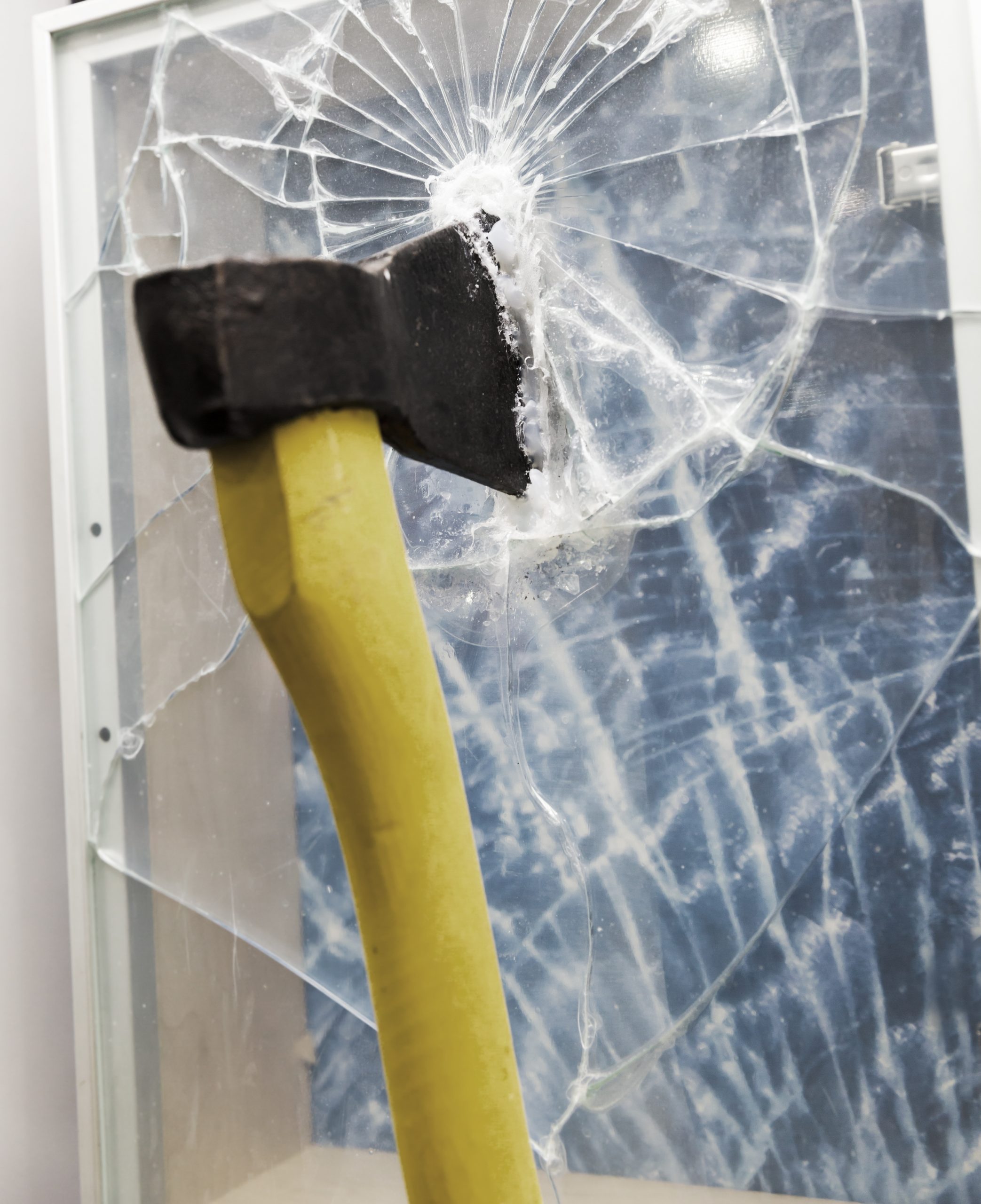
Unlike standard window glass that shatters easily when struck, anti-vandal glass is engineered to remain intact even after repeated blows.
This makes it far more difficult for an intruder to create an opening or gain access through the glazing.
Anti-vandal glass is commonly used in locations where protection against vandalism, theft or forced entry is required.
It is widely specified for retail environments, public buildings, transport infrastructure and secure facilities where glazing may be exposed to intentional damage.
As experienced security glass manufacturers in the UK, Tecdur designs and manufactures Tecdur Secure Glass — a high-performance laminated glass range engineered to withstand severe levels of manual attack while maintaining clarity and architectural integration.
How Does Anti-Vandal Glass Work?
Anti-vandal glass is typically manufactured using a laminated glass construction.
Multiple layers of glass are bonded together with high-strength interlayers that absorb impact energy and hold fragments together when the glass breaks.
When struck, the glass may crack but it does not immediately shatter or fall away.
Instead, the interlayer keeps the panel intact, preventing a quick opening from being created.
This delay is critical in security design, as it can deter opportunistic attacks and provide time for intervention.
Anti-Vandal Glass Testing Standards
Anti-vandal glass is usually certified to recognised security standards.
One of the most widely used standards is EN 356, which measures glass resistance to manual attack.
- P1A – P5A: tested using repeated steel ball drops
- P6B – P8B: tested using multiple axe strikes
Higher ratings indicate greater resistance to sustained attack.
Selecting the appropriate classification depends on the level of threat, the value of assets being protected and insurance or regulatory requirements.
Where Is Anti-Vandal Glass Used?
Anti-vandal glass is often installed in environments where glazing is exposed to public access or where valuable goods need protection.
It is commonly specified as part of a wider security glazing system including doors, screens and partitions.
- High value retail storefronts
- Commercial buildings and offices
- Transport hubs and public infrastructure
- Prisons and police custody suites
- Mental health facilities
- High security facilities
Can Anti-Vandal Glass Provide Additional Performance?
Modern security glazing can deliver far more than just impact resistance.
Tecdur Secure Glass can be enhanced to provide additional certified performance characteristics depending on project requirements.
- Ballistic resistance (EN 1063)
- Blast resistance
- Fire resistance (Exova, CertiFire)
- Acoustic insulation
- Switchable privacy glass technology
The overall performance of anti-vandal glazing depends not only on the glass but also on the framing system and installation method.
A correctly specified glazing system ensures the entire assembly performs as intended.
Secure Glass can be:

Enhance Security

Impact Resistant

Bullet Resistant

Blast Resistant

Fire Resistant

Acoustic

Why Choose Tecdur?
With over 15 years of industry experience and extensive in-house manufacturing capability, Tecdur delivers certified,
high-performance security glazing engineered to protect people and property. Our technical team works closely with
architects, contractors and specifiers to ensure the correct anti-vandal glass specification is selected for each project.