



What Types of Anti-Vandal Glass Are Available?
Learn about the different types of anti-vandal glass and how each option provides protection against impact, vandalism and forced entry.
Anti-vandal glass is a category of security glazing designed to resist deliberate damage, heavy impact and attempted intrusion.
Rather than being a single product, anti-vandal glass includes a range of laminated glass constructions engineered for different levels of protection.
The type of anti-vandal glass used will depend on the threat level, the application and the required certification standard.
Lower levels are designed to protect against vandalism and accidental damage, while higher specifications can withstand sustained manual attack.
As experienced security glass manufacturers in the UK, Tecdur designs and manufactures Tecdur Secure Glass —
a high-performance laminated glass range engineered to withstand severe levels of manual attack while maintaining architectural clarity.
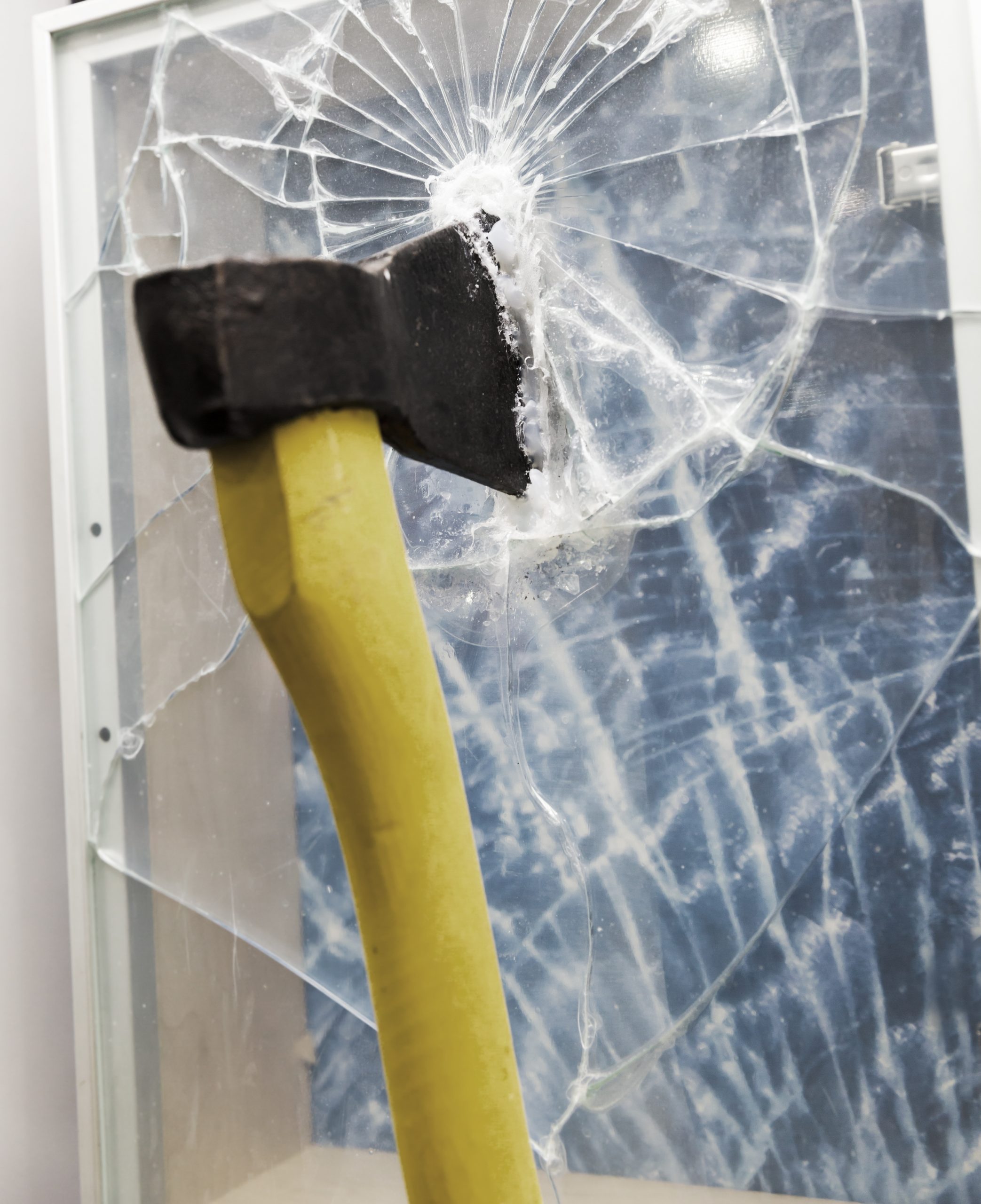
Laminated Anti-Vandal Glass
Laminated glass is the most common type of anti-vandal glazing. It consists of two or more layers of glass bonded together with a tough interlayer.
This interlayer absorbs impact energy and holds the glass fragments together if the panel cracks.
Because the glazing remains intact after impact, laminated glass significantly delays attempts to break through a window or door.
This makes it widely used for shopfronts, commercial buildings and public environments.
EN 356 Rated Anti-Vandal Glass
Anti-vandal glass is often classified according to EN 356, the European standard for resistance to manual attack.
These ratings help specifiers choose the appropriate level of protection for different environments.
- P1A – P5A ratings resist heavy impact such as thrown objects or repeated blows.
- P6B – P8B ratings are designed to withstand repeated axe strikes.
Higher classifications are typically used where greater security is required, such as financial institutions, high-value retail environments or secure facilities.
Enhanced Security Glass Systems
In many projects, anti-vandal glass forms part of a wider security glazing system.
Depending on the building’s risk profile, glass can be enhanced with additional performance characteristics.
- Ballistic resistance (EN 1063)
- Blast resistance
- Fire resistant glazing systems
- Acoustic laminated glass
- Switchable privacy glass technology
These enhanced solutions allow architects and designers to combine security performance with other building requirements such as safety, privacy and acoustic control.
Choosing the Right Type of Anti-Vandal Glass
The correct specification depends on several factors including the level of risk, building type and the assets being protected.
For example, retail storefronts may require impact-resistant laminated glass, while secure facilities may need higher-rated security glazing certified to EN 356 or LPS 1270.
Consulting with experienced manufacturers helps ensure the glazing system provides the correct balance of protection, performance and cost efficiency.
Secure Glass can be:

Enhance Security

Impact Resistant

Bullet Resistant

Blast Resistant

Fire Resistant

Acoustic

Why Choose Tecdur?
With over 15 years of industry experience and advanced in-house manufacturing capability, Tecdur provides high-performance laminated security glass designed to protect people and property.
Our team works closely with architects, contractors and security consultants to specify the correct anti-vandal glass solution for each project.
Whether you require glazing to resist vandalism, forced entry or severe manual attack, Tecdur Secure Glass offers a tested and reliable solution.