



Learn what impact resistant glass is, how it works, where it is used, and why certified security glazing is important for protecting people, property and assets.
Impact resistant glass is specialist glazing designed to withstand force from impact, attempted breakage, vandalism or manual attack.
Unlike standard glass, which can fracture and fall away quickly when struck, impact resistant glass is engineered to remain in place and continue acting as a protective barrier.
It is commonly used in buildings where glazing forms part of the first line of defence.
This can include retail premises, commercial buildings, secure doors, reception screens, custody suites, mental health facilities and high security environments.
As experienced security glass manufacturers in the UK, Tecdur designs and manufactures Tecdur Secure Glass —
a high-performance laminated glass range engineered to withstand severe levels of manual attack and certified to recognised standards including EN 356 and LPS 1270.
What Does Impact Resistant Glass Mean?
Impact resistant glass refers to glazing that has been designed to resist breakage or penetration when struck.
This may involve accidental impact, thrown objects, vandalism, attempted forced entry or a more sustained manual attack.
The term can cover a range of glass types and performance levels, from laminated safety glass through to certified security glass tested against recognised standards.
For higher-risk projects, it is important to specify glass based on tested performance rather than relying on thickness alone.
How Does Impact Resistant Glass Work?
Impact resistant glass is usually manufactured using a laminated construction.
This means multiple layers of glass are bonded together with specialist interlayers that help absorb impact energy.
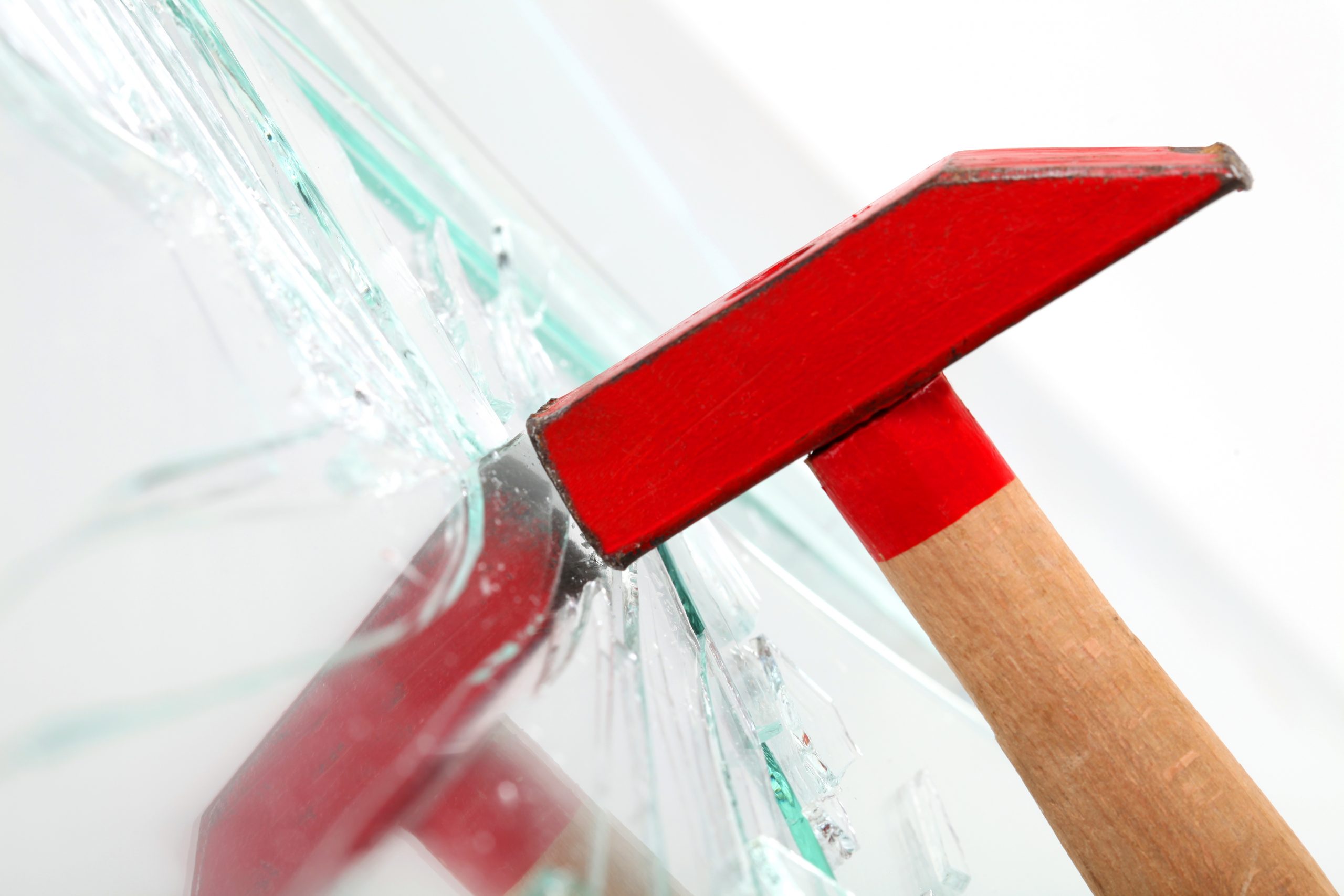
When the glass is struck, it may crack, but the interlayers help hold the broken glass together.
This reduces the risk of the panel immediately falling away and makes it much more difficult to create an opening.
- Helps resist impact from heavy objects
- Can delay forced entry attempts
- Maintains a barrier even when damaged
- Supports safer, more secure glazing design
- Can be specified to recognised security standards
Impact Resistant Glass and EN 356
One of the most important standards for impact resistant security glazing is EN 356.
This standard classifies glass according to its resistance to manual attack, with ratings ranging from P1A to P8B.
EN 356 ratings from P1A to P5A are tested using steel ball drops.
These classifications are typically used where impact resistance, vandal resistance or anti-bandit performance is required.
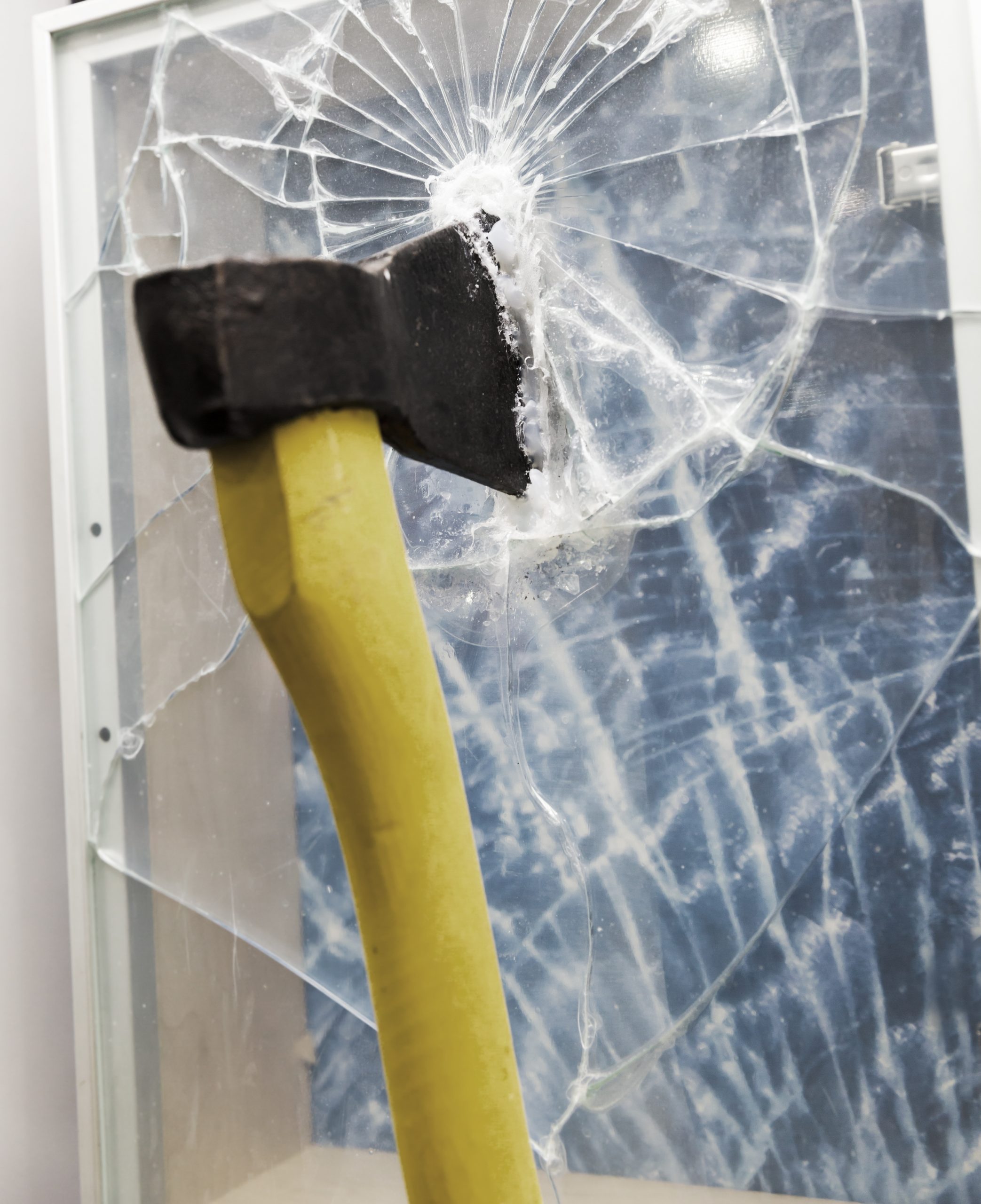
Higher ratings from P6B to P8B are tested using repeated axe strikes.
These classifications are used for higher-security applications where the glass must resist sustained manual attack.
- P1A to P5A – impact resistance tested by steel ball drop
- P6B to P8B – manual attack resistance tested by axe strikes
Where Is Impact Resistant Glass Used?
Impact resistant glass is used wherever glazing needs to provide additional protection against damage, intrusion or attack.
It is often specified in public-facing, high-value or high-risk environments.
- Retail shopfronts and display windows
- Commercial buildings and office entrances
- Security doors and glazed screens
- Reception areas and counters
- Schools, healthcare and public buildings
- Prisons and police custody suites
- Mental health establishments
- High security facilities
Impact Resistant Glass vs Standard Glass
Standard glass is not designed to provide meaningful resistance against repeated impact or attack.
Once broken, it can leave an opening that allows access through the glazing.
Impact resistant glass is designed to perform differently.
Its laminated construction helps keep the panel together after impact, improving safety and delaying access.
This makes it a much stronger choice for buildings where security or occupant protection is a priority.
Can Impact Resistant Glass Offer Other Benefits?
Depending on the specification, impact resistant glass can be combined with additional performance features.
Tecdur Secure Glass can be enhanced to support wider project requirements, including:
- Enhanced security performance
- Ballistic resistance to EN 1063
- Blast resistance
- Fire resistance
- Acoustic reduction
- Switchable privacy glass technology
This makes impact resistant glass suitable for projects where glazing must deliver more than one type of protection within a single system.
Secure Glass can be:

Enhanced Security

Impact Resistant

Bullet Resistant

Blast Resistant

Fire Resistant

Acoustic
Why Choose Tecdur?
With over 15 years of industry experience and extensive in-house manufacturing capability, Tecdur provides certified, high-performance security glazing designed to protect people and property.
Our team works closely with architects, contractors and specifiers to ensure the right impact resistant glass is selected for each project.
Whether you need EN 356 rated impact resistance, anti-bandit glass, higher-level manual attack resistance or a multi-performance security glazing system, Tecdur can help you specify the right tested solution.