



Learn what EN 356 P6B to P8B glass ratings mean, how axe attack testing works, and where higher-level security glazing is typically specified.
EN 356 P6B to P8B glass refers to the higher security classifications within the EN 356 standard.
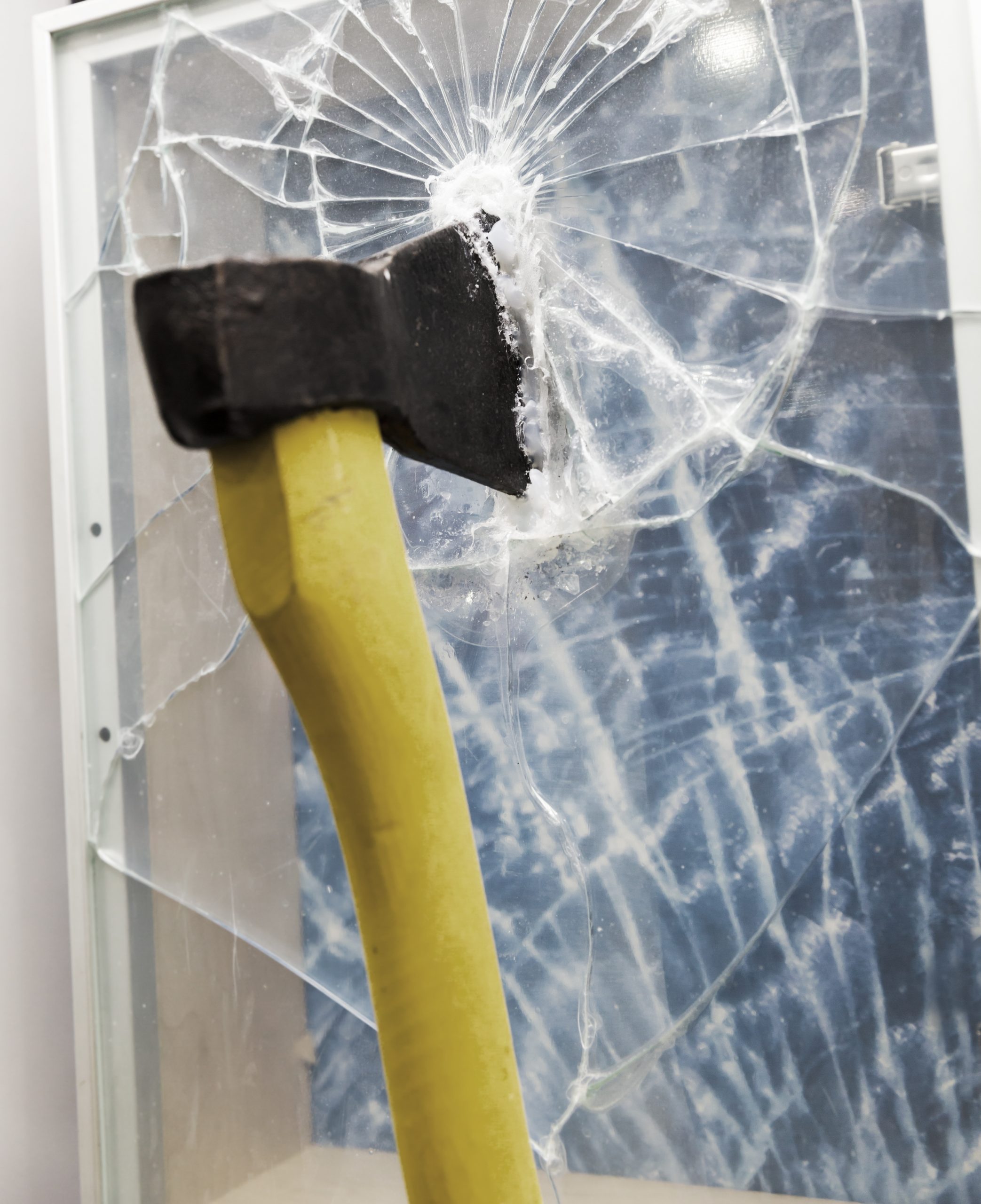
Unlike P1A to P5A ratings, which are tested using steel ball drops, P6B to P8B glass is tested using repeated axe strikes.
These ratings are used where glazing must provide resistance against sustained manual attack.
P6B, P7B and P8B glass are commonly specified for anti-bandit glass, high security glass and forced entry resistant glazing systems.
As experienced security glass manufacturers in the UK, Tecdur designs and manufactures Tecdur Secure Glass —
a high-performance laminated glass range engineered to withstand severe levels of manual attack and certified to recognised standards including EN 356 and LPS 1270.
What Are P6B to P8B Ratings?
P6B, P7B and P8B are EN 356 classifications that measure resistance to repeated axe strikes.
The purpose of the test is to determine how long the glass can resist a determined manual attack before an opening can be formed.
These classifications are significantly more demanding than the P1A to P5A ratings and are typically used where security risk is higher.
How Does Axe Attack Testing Work?
During the EN 356 axe attack test, the glass is repeatedly struck in a defined area.
The test measures the number of strikes required to create an aperture, or opening, large enough to pass through the glazing.
This simulates a more determined attack using tools, making it highly relevant for buildings where forced entry resistance is essential.
P6B, P7B and P8B Ratings Explained
The difference between P6B, P7B and P8B is the number of axe strikes the glass can withstand before an opening is created.
The higher the classification, the greater the resistance to sustained manual attack.
- P6B – approximately 30 to 50 axe strikes
- P7B – approximately 51 to 70 axe strikes
- P8B – more than 70 axe strikes
Where Is P6B to P8B Glass Used?
EN 356 P6B to P8B glass is specified where a higher level of security is required and where glazing may be exposed to sustained attack.
Typical applications include:
- High value retail storefronts
- Commercial buildings requiring enhanced protection
- Security doors and glazed screens
- VIP protection environments
- Prisons and police custody suites
- Mental health establishments
- High security facilities
P6B to P8B vs P1A to P5A
The key difference between P6B to P8B and P1A to P5A is the type of test and the threat level being simulated.
P1A to P5A glass is tested using steel ball drops and is typically used for impact resistance and vandal protection.
P6B to P8B glass is tested using axe strikes and is used for higher levels of manual attack resistance.
Why Tested Performance Matters
When specifying higher-level security glazing, it is important to focus on tested performance rather than thickness alone.
EN 356 ratings provide a clear benchmark that helps project teams compare products and select the correct resistance level.
A certified P6B, P7B or P8B glass system gives confidence that the glazing has been tested against sustained attack conditions and can provide the required level of protection.
Secure Glass can be:

Enhance Security

Impact Resistant

Bullet Resistant

Blast Resistant

Fire Resistant

Acoustic
Why Choose Tecdur?
With over 15 years of industry experience and extensive in-house manufacturing capability, Tecdur provides certified, high-performance security glazing designed to protect people and property.
Our team works closely with architects, contractors and specifiers to ensure the correct EN 356 glass rating is selected for each project.
Whether you require P6B, P7B or P8B axe attack resistance, Tecdur can help you specify the right tested security glass system for your application.