



How Does Anti-Vandal Glass Work?
Learn how anti-vandal glass resists impact, prevents forced entry and protects buildings from deliberate damage.
Anti-vandal glass works by using a laminated glass construction that absorbs impact energy and prevents the glazing from shattering into an open gap.
Unlike standard window glass, which can break instantly when struck, anti-vandal glass is engineered to remain intact even after repeated impacts.
This type of glazing is designed to delay or prevent forced entry attempts. Even when the outer glass layer cracks, the internal interlayer holds the panel together,
stopping intruders from quickly creating an opening large enough to pass through.
As experienced security glass manufacturers in the UK, Tecdur develops Tecdur Secure Glass to withstand severe levels of manual attack while maintaining clarity and architectural performance.
The Laminated Glass Structure
The core technology behind anti-vandal glass is laminated glazing. This involves bonding two or more sheets of glass together with a tough interlayer,
typically made from specialist polymer materials designed to absorb impact.
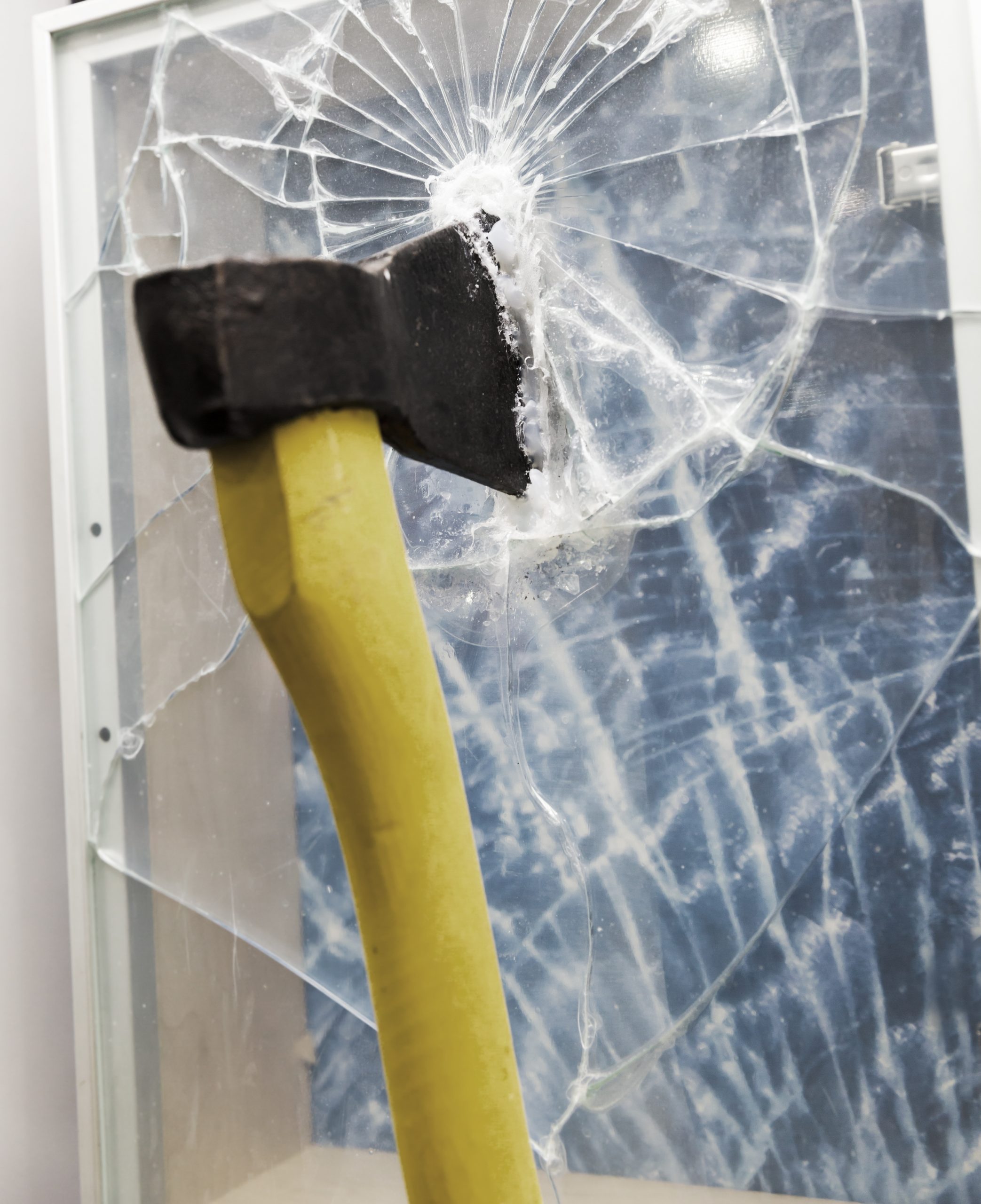
When the glass is struck, the outer layer may crack but the interlayer prevents the fragments from separating.
Instead of falling away, the glass remains bonded together as a single panel. This significantly slows down attempts to break through the glazing.
Impact Absorption and Energy Distribution
Anti-vandal glass also works by distributing the force of impact across the entire laminated panel.
Rather than concentrating stress at a single point, the glass and interlayer combination spreads the energy throughout the glazing system.
This energy absorption reduces the likelihood of immediate penetration and helps the glass withstand multiple blows from tools or heavy objects.
How Anti-Vandal Glass Is Tested
Anti-vandal glass performance is measured using recognised testing standards. The most widely used European standard is EN 356,
which classifies glass resistance to manual attack.
- P1A – P5A ratings use repeated steel ball drops to simulate heavy impact.
- P6B – P8B ratings require the glass to withstand repeated axe strikes before an opening can be created.
These tests simulate real-world attack scenarios and ensure the glazing performs consistently when installed in security-sensitive environments.
Where Anti-Vandal Glass Is Used
Anti-vandal glass is widely used in locations where glazing may be exposed to deliberate damage or attempted intrusion.
It forms part of the first line of defence in many security strategies.
- Retail storefronts and display windows
- Commercial buildings and offices
- Transport infrastructure and public buildings
- Prisons and police custody suites
- Mental health establishments
- High security facilities
In these environments, the goal is not only to prevent damage but to delay intrusion long enough for security measures to respond.
Secure Glass can be:

Enhance Security

Impact Resistant

Bullet Resistant

Blast Resistant

Fire Resistant

Acoustic

Why Choose Tecdur?
With over 15 years of industry experience and advanced in-house manufacturing capability,
Tecdur provides high-performance security glazing designed to protect people and property.
Our technical team works closely with architects, contractors and specifiers to ensure the correct anti-vandal glass specification is selected for each project.