



How Is Anti-Vandal Glass Tested for Impact Resistance?
Learn how anti-vandal glass is tested for impact resistance and how recognised standards measure the strength of security glazing.
Anti-vandal glass is specifically engineered to resist deliberate damage and repeated impacts. To ensure this type of glazing performs as expected in real environments, it must undergo rigorous laboratory testing under recognised industry standards.
These tests simulate real-world attacks using heavy objects and tools to determine how well the glass can resist penetration. The results are used to classify security glass performance and help architects and specifiers choose the correct glazing for each project.
As experienced security glass manufacturers in the UK, Tecdur designs and manufactures Tecdur Secure Glass to meet recognised standards such as EN 356 and LPS 1270. These tests confirm the glass can withstand severe levels of manual attack while maintaining structural integrity.
EN 356 Impact Testing
One of the most widely used standards for testing anti-vandal and security glass in Europe is EN 356. This standard evaluates the resistance of glass to manual attack and classifies glazing according to its performance.
EN 356 includes two main testing methods designed to simulate different types of impact.
Steel Ball Drop Test (P1A – P5A)
Lower classifications under EN 356 use a heavy steel ball drop test. During the test, a large steel ball is dropped repeatedly onto the glass from a set height.
The glass must resist penetration after multiple impacts to achieve its classification. The number of drops and the energy involved increase as the classification level rises.
- P1A
- P2A
- P3A
- P4A
- P5A
Axe Impact Test (P6B – P8B)
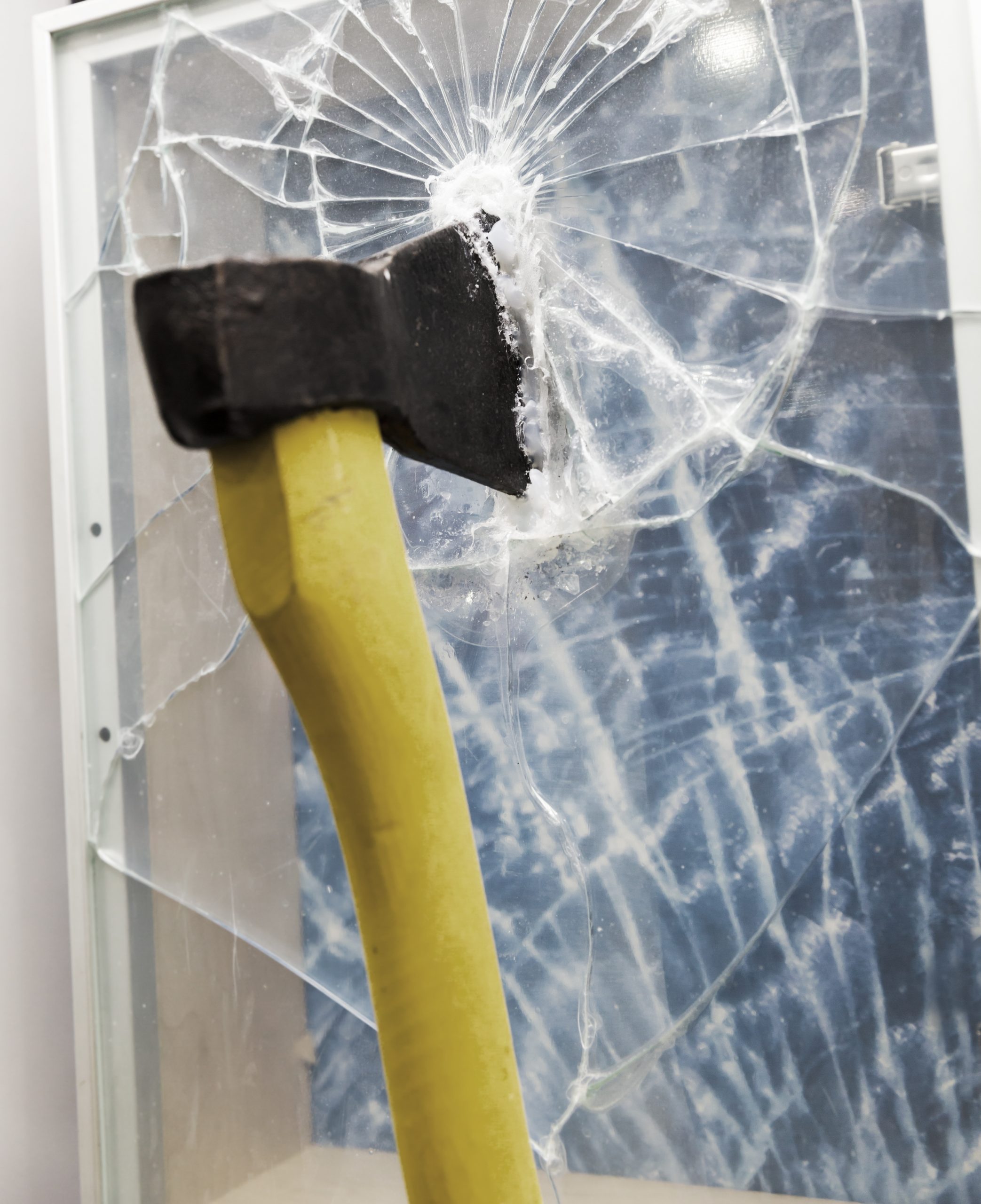
Higher levels of security glass are tested using repeated strikes from an axe. This test simulates a determined attempt to break through glazing using tools.
The classification depends on how many axe strikes are required to create an opening large enough to pass through.
- P6B – approximately 30 to 50 axe strikes
- P7B – approximately 51 to 70 axe strikes
- P8B – more than 70 axe strikes
LPS 1270 Security Testing
In addition to EN 356, security glass may also be tested to LPS 1270, a standard developed by the Loss Prevention Certification Board. This standard was created with input from insurers and security professionals to simulate more realistic attack scenarios.
LPS 1270 testing evaluates how long glass can resist attacks using different tools. The system classifies glazing according to how long it takes to create openings of different sizes.
- Small opening tests to simulate access to handles or locks
- Hand-sized opening tests
- Large openings allowing full body access
Why Impact Testing Is Important
Impact testing ensures that security glazing will perform reliably under real-world conditions. Without standardised testing, it would be difficult to compare products or verify their ability to resist attack.
Certified testing gives architects, contractors and security consultants confidence that the glazing system will provide the required level of protection when installed in a building.
Secure Glass can be:

Enhance Security

Impact Resistant

Bullet Resistant

Blast Resistant

Fire Resistant

Acoustic
Why Choose Tecdur?
With over 15 years of industry experience and extensive in-house manufacturing capability, Tecdur provides high-performance laminated security glass designed to protect people and property. Our team supports architects, contractors and security consultants in selecting the correct glazing specification for each project.
Tecdur Secure Glass can also be enhanced with additional performance characteristics including ballistic resistance, fire resistance, blast resistance, acoustic performance and switchable privacy technology.