



Learn what affects the cost of impact resistant glass, including security ratings, laminated build-up, panel size, installation requirements and additional performance features.
The cost of impact resistant glass depends on the level of protection required, the glass specification, panel size, framing system and any additional performance features needed for the project.
Because impact resistant glass can range from general laminated safety glass to certified high-security glazing, prices can vary significantly.
For lower-risk applications, laminated impact resistant glass may provide suitable protection against accidental impact, vandalism or opportunistic damage.
For higher-risk projects, certified security glazing tested to standards such as EN 356 or LPS 1270 may be required, which can increase the overall cost.
As experienced security glass manufacturers in the UK, Tecdur designs and manufactures Tecdur Secure Glass —
a high-performance laminated glass range engineered to withstand severe levels of manual attack while delivering project-specific protection for commercial, institutional and high-security applications.
What Affects the Cost of Impact Resistant Glass?
1. Level of Impact Resistance
The required level of resistance is one of the biggest factors affecting cost.
A general laminated glass specification for lower-risk impact resistance will usually differ from a certified security glass system designed to resist repeated attack.
Higher performance ratings typically require more advanced laminated constructions, specialist interlayers and more detailed specification support.
2. EN 356 Rating
For security applications, impact resistant glass is often specified to EN 356.
Lower ratings from P1A to P5A are tested using steel ball drops and are commonly used for impact resistance and anti-vandal applications.
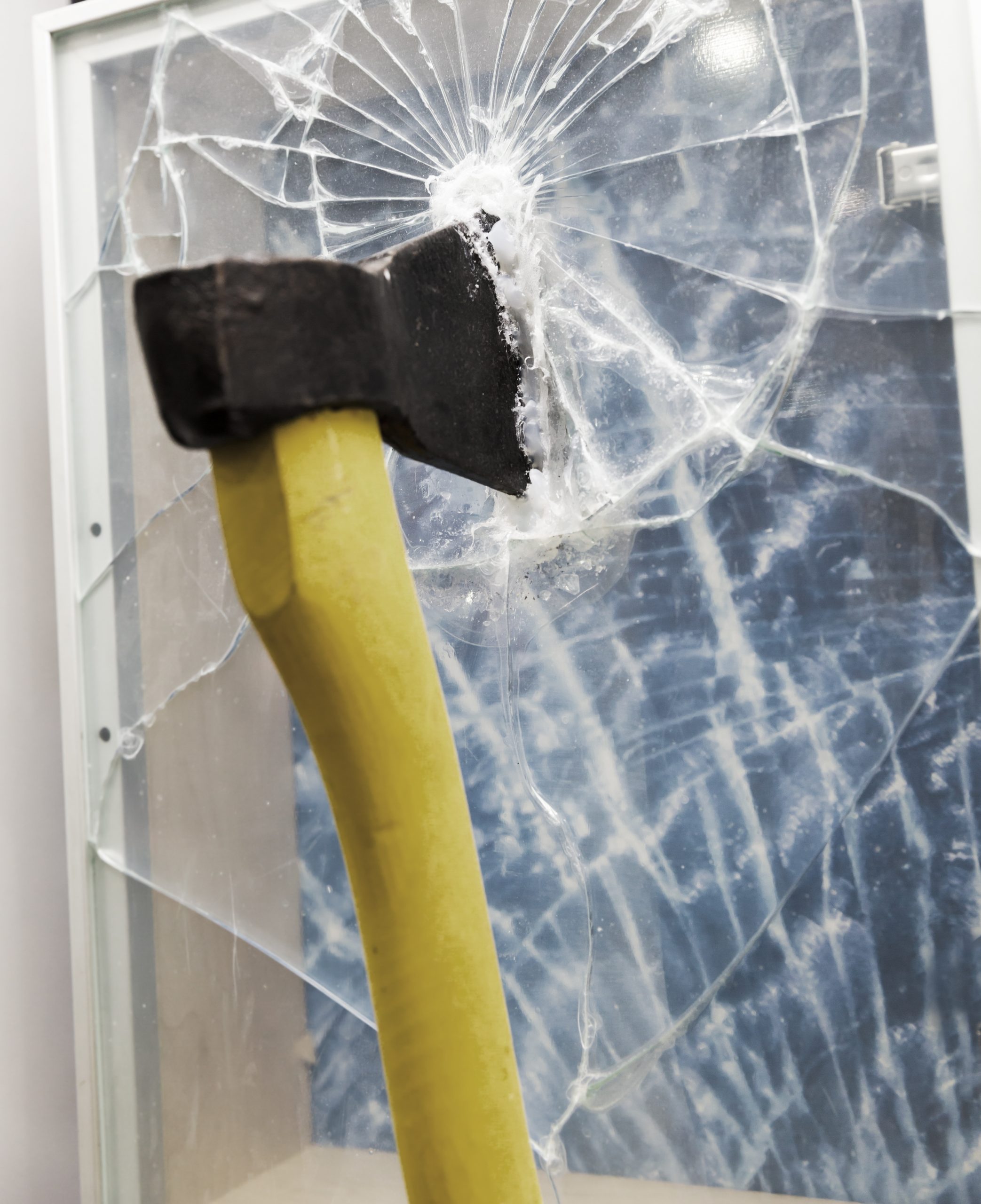
Higher ratings from P6B to P8B are tested using repeated axe strikes and are generally used where a more serious manual attack risk exists.
These higher classifications usually cost more because they require stronger laminated glass constructions.
3. Glass Thickness and Laminated Build-Up
Impact resistant glass is usually made from multiple layers of glass bonded with specialist interlayers.
As the required protection level increases, the laminated build-up may become thicker, heavier and more complex.
However, thickness alone does not determine cost or performance.
The type of interlayer, number of glass layers, certified test rating and overall glazing system all influence the final specification.
4. Panel Size, Shape and Quantity
Larger glass panels generally cost more due to material use, handling requirements and manufacturing complexity.
Bespoke sizes, shaped panes, drilled holes, cut-outs or specialist edgework can also affect the final price.
Project quantity can also influence cost.
Larger orders may allow for production efficiencies, while one-off specialist panels can require more bespoke manufacturing time.
5. Frame and Installation Requirements
Impact resistant glass must be considered as part of a complete glazing system.
The frame, fixings and installation method need to be suitable for the selected glass specification.
A high-performance glass panel will only deliver its intended protection if it is installed into a suitable frame system.
This means the overall cost may include more than the glass itself.
Additional Performance Features Can Affect Cost
Some projects require impact resistant glass to provide more than impact resistance alone.
Tecdur Secure Glass can be enhanced with additional performance features where required.
- Enhanced security performance
- Ballistic resistance to EN 1063
- Blast resistance
- Fire resistance
- Acoustic reduction
- Switchable privacy glass technology
Combining multiple performance requirements can influence the final laminated build-up, glass thickness, weight, manufacturing process and overall project cost.
Why Impact Resistant Glass Should Be Priced by Specification
Impact resistant glass should not be priced by thickness alone.
Two glass products can look similar but perform very differently depending on their construction and test certification.
The most accurate way to determine cost is to assess the required performance level, glazing location, panel sizes, frame compatibility and wider security requirements.
This helps avoid under-specifying the glass, which may leave a building vulnerable, or over-specifying, which can add unnecessary cost and weight.
How to Get an Accurate Quote
To price impact resistant glass accurately, project teams should provide as much specification detail as possible.
Useful information includes the required security rating, panel sizes, quantities, frame system, application type and any additional performance requirements.
- Required EN 356 or LPS 1270 rating
- Panel dimensions and quantities
- Application, such as doors, screens, shopfronts or internal partitions
- Frame or glazing system details
- Any ballistic, blast, fire, acoustic or privacy requirements
Secure Glass can be:

Enhanced Security

Impact Resistant

Bullet Resistant

Blast Resistant

Fire Resistant

Acoustic
Why Choose Tecdur?
With over 15 years of industry experience and extensive in-house manufacturing capability, Tecdur provides certified, high-performance security glazing designed to protect people and property.
Our team works closely with architects, contractors and specifiers to ensure the correct impact resistant glass specification is selected for each project.
Whether you require impact resistant glass for a retail shopfront, commercial entrance, secure facility or specialist high-security application, Tecdur can help specify a tested solution that balances protection, performance and budget.