


Discover how anti-bandit glass compares to standard glass in terms of strength, impact resistance and protection against forced entry.
The difference in strength between anti-bandit glass and standard glass is significant.
While standard glass is designed for visibility and basic protection from the elements, anti-bandit glass is engineered to resist deliberate attack, repeated impact and forced entry.
Standard glass can break with a single strong impact, often creating an immediate opening.
Anti-bandit glass, however, is designed to remain intact even after multiple heavy strikes, making it far more difficult to penetrate.
As experienced security glass manufacturers in the UK, Tecdur designs and manufactures Tecdur Secure Glass —
a high-performance laminated glass range engineered to withstand severe levels of manual attack while maintaining clarity and architectural integration.
How Standard Glass Behaves Under Impact
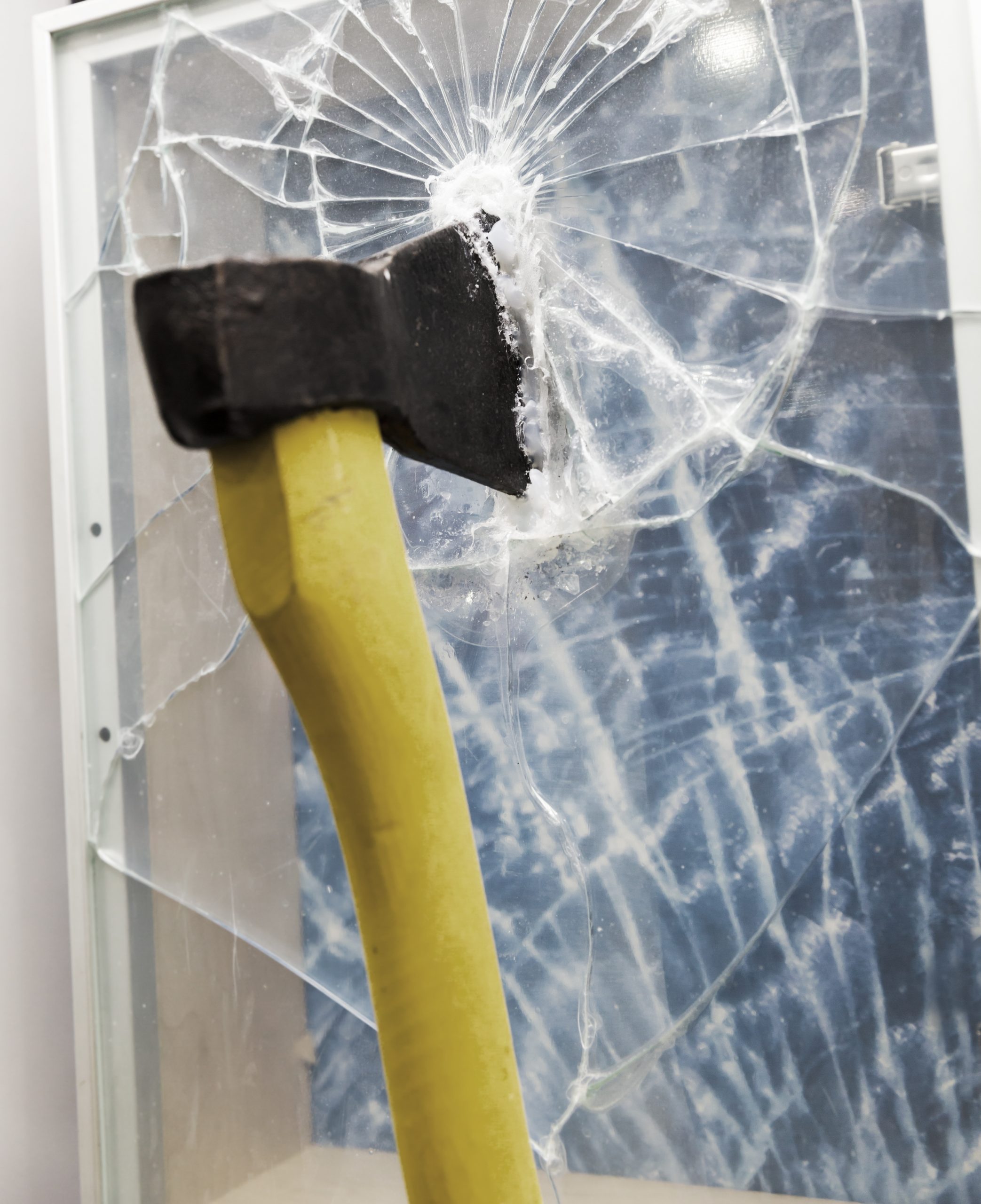
Standard annealed glass is brittle and has limited resistance to impact. When struck with sufficient force, it fractures quickly and breaks apart into sharp fragments.
This means that even a single blow can create an opening large enough for access, making standard glass unsuitable for environments where security is a concern.
Why Anti-Bandit Glass Is Much Stronger
Anti-bandit glass is significantly stronger because of its laminated construction.
Multiple layers of glass are bonded together with strong interlayers that absorb impact energy and hold the panel together when damaged.
When the glass is struck:
- The outer layer may crack
- The interlayer holds the fragments together
- The glass remains in place rather than collapsing
- Repeated impacts are required to create an opening
This ability to resist multiple strikes is what makes anti-bandit glass suitable for protecting buildings against forced entry.
How Strength Is Measured
The strength of anti-bandit glass is measured using recognised standards such as EN 356.
This standard classifies glass based on its resistance to impact and manual attack.
- P1A – P5A ratings involve repeated steel ball drop tests
- P6B – P8B ratings involve repeated axe strikes
Higher classifications require the glass to withstand significantly more force and repeated impacts before an opening can be created.
Real-World Strength Comparison
In practical terms, the difference in strength can be summarised as follows:
- Standard glass can fail after a single heavy impact
- Anti-bandit glass can withstand repeated impacts without immediate penetration
- Higher-rated glass can resist dozens of tool strikes
- Laminated construction prevents the glass from collapsing
This makes anti-bandit glass far more effective as part of a building’s security strategy.
Where Stronger Glass Is Needed
Anti-bandit glass is typically used in environments where glazing must provide protection against vandalism or intrusion.
- Retail storefronts protecting high-value goods
- Commercial buildings and offices
- VIP protection environments
- Prisons and custody suites
- Mental health facilities
- High security buildings
Secure Glass can be:

Enhance Security

Impact Resistant

Bullet Resistant

Blast Resistant

Fire Resistant

Acoustic
Why Choose Tecdur?
With over 15 years of industry experience and advanced in-house manufacturing capability, Tecdur provides certified, high-performance security glazing designed to protect people and property.
Our team works closely with architects, contractors and specifiers to ensure the correct anti-bandit glass specification is selected for each project.
Whether you need impact-resistant glazing or higher-level security performance, Tecdur can advise on the right solution for your application.