



P6B Security Glass
A practical guide to EN 356 P6B anti-bandit glass: what it is, how it is tested, and where it is typically specified.
P6B security glass is a high-performance laminated glazing classification under the EN 356 standard.
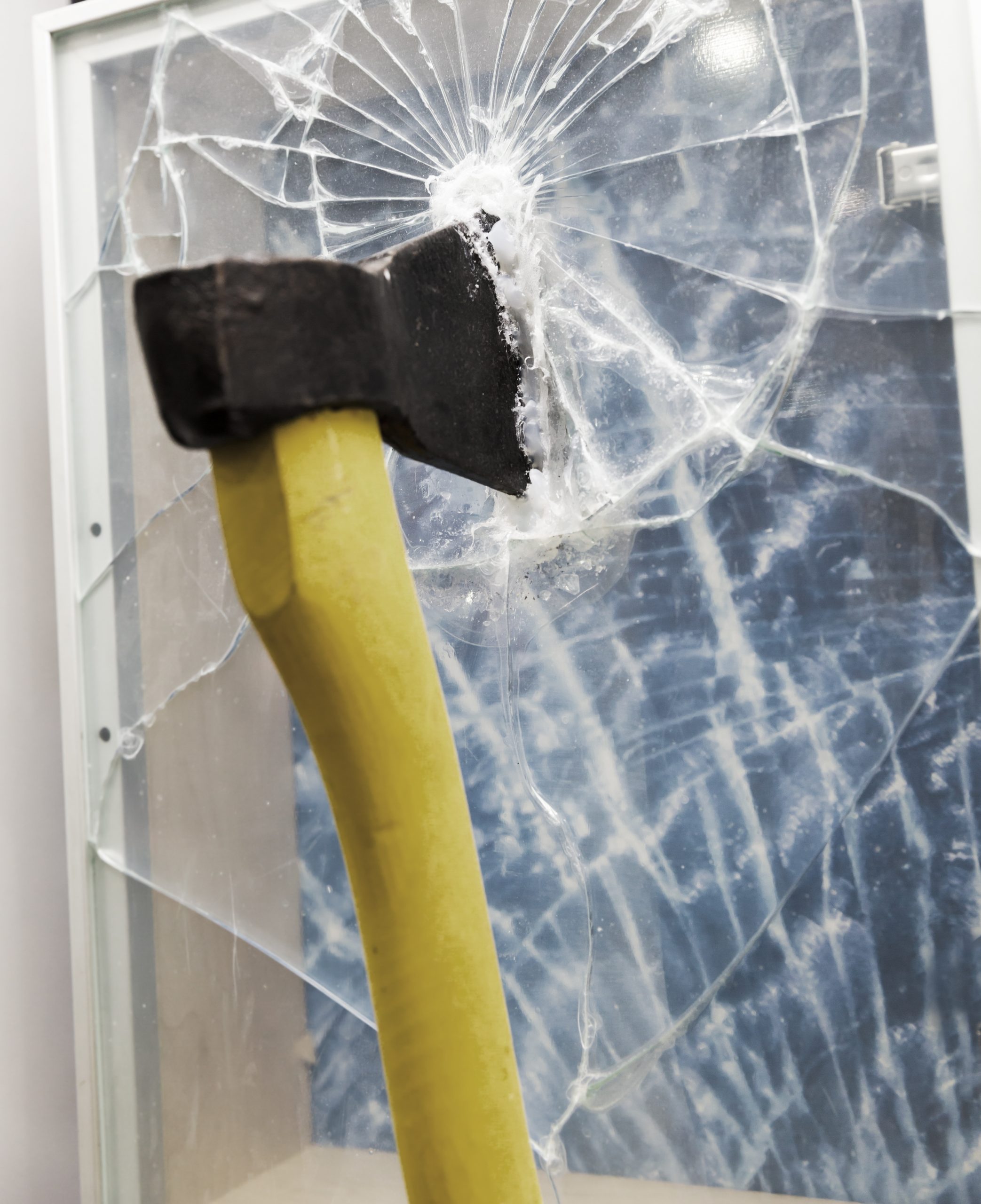
It is commonly referred to as anti-bandit glass and is designed to withstand sustained manual attack using an axe.
In simple terms, P6B glass is engineered to delay forced entry by resisting repeated heavy strikes before an opening can be created.
As specialist security glass manufacturers in the UK, Tecdur designs and manufactures Tecdur Secure Glass for projects where security glazing is a first line of defence.
Our team works with you to specify the correct EN 356 rating and overall glass system performance, balancing protection, design requirements and project practicalities.
What Does P6B Mean in EN 356?
EN 356 is the European standard used to classify glass resistance to manual attack. Ratings range from P1A to P8B.
The lower levels (P1A to P5A) are tested using repeated steel ball drops, while the higher levels (P6B to P8B) are tested using repeated axe strikes.
The “B” classifications focus on resisting the formation of an aperture (a hole or opening) large enough to permit access.
P6B sits at the start of the axe-test categories, making it a popular choice for environments that require strong protection without moving to the highest security classifications.
How Is P6B Security Glass Tested?
For EN 356 P6B, the glass must withstand multiple strikes from an axe before an aperture can be created.
As a general guide, if the glazing can withstand 30–50 axe strikes before an opening is formed, the P6B classification is achieved.
Higher strike counts correspond to P7B and P8B.
This test is designed to simulate a determined intruder using heavy tools rather than opportunistic impact.
The goal is not simply to “avoid cracking”, but to delay penetration and prevent an attacker from quickly creating a pass-through opening.
Where Is P6B Security Glass Typically Used?
P6B security glass is often specified where there is a credible risk of forced entry using hand tools and where delaying intrusion is critical.
It is used across both commercial and institutional environments, and may also be integrated into security doors, screens and partitions.
- High value retail and display windows
- Commercial premises with high-value stock or assets
- High security facilities and controlled access sites
- Custody suites and secure institutional environments (where appropriate)
- Security doors and glazed screens
P6B vs P7B vs P8B: What’s the Difference?
P6B, P7B and P8B are all EN 356 axe-test classifications. The key difference is how long the glass resists repeated strikes
before an aperture can be created.
- P6B: resists sustained axe attack (often referenced as roughly 30–50 strikes)
- P7B: higher resistance (often referenced as roughly 51–70 strikes)
- P8B: highest resistance in EN 356 (often referenced as 70+ strikes)
The best rating depends on a realistic threat assessment, insurance guidance and the operational requirements of the site.
Over-specifying can introduce unnecessary cost and weight, while under-specifying can leave vulnerable areas exposed.
Can P6B Glass Be Enhanced Further?
Yes. Depending on project requirements, Tecdur Secure Glass can be enhanced to deliver additional performance benefits, including:
- Ballistic resistance (EN 1063)
- Blast resistance
- Fire resistance (Exova, CertiFire)
- Acoustic performance
- Switchable privacy technology
It is also essential to match the glass with an appropriate framing system and installation method.
The overall security performance depends on the integrity of the complete glazing system, not just the glass.
Secure Glass can be:

Enhance Security

Impact Resistant

Bullet Resistant

Blast Resistant

Fire Resistant

Acoustic
Why Choose Tecdur for P6B Security Glass?
With over 15 years of industry experience and extensive in-house manufacturing capability,
Tecdur is recognised for performance and technical know-how in security glazing.
As dedicated security glass manufacturers in the UK, we help you specify the correct EN 356 rating,
align performance with project risk, and deliver consistently high-quality, cost-effective security glass.
If you are unsure whether P6B is the right classification for your application, our team can advise on EN 356 and LPS 1270 options,
along with framing considerations and potential performance enhancements.