



Security Glass for Cars
Understanding automotive security glazing, how it differs from architectural security glass, and when specialist solutions are required.
Security glass for cars typically refers to automotive glazing designed to improve occupant safety and reduce the risk of intrusion.
In most road vehicles, “security” is achieved through a combination of laminated and toughened automotive glass that is manufactured to vehicle glazing regulations.
In higher-risk applications, enhanced glazing may also be specified to provide increased resistance to manual attack or ballistic threats.
It’s important to note that automotive security glass and architectural security glass are not the same product category.
Building security glass is specified to standards such as EN 356 (anti-bandit) and LPS 1270 (security glazing), which simulate forced-entry and manual attack scenarios.
Automotive glazing is designed and certified under different vehicle-focused requirements, and must also meet weight, visibility and curvature constraints.
As established security glass manufacturers in the UK, Tecdur primarily designs and manufactures high-performance security glazing for buildings,
including glass engineered to withstand severe levels of manual attack. If your project involves vehicles within a wider secure environment
(such as protected facilities, secure checkpoints or high-value logistics sites), Tecdur can advise on appropriate architectural security glazing solutions
for perimeter protection, guardhouses, screening and access control areas.
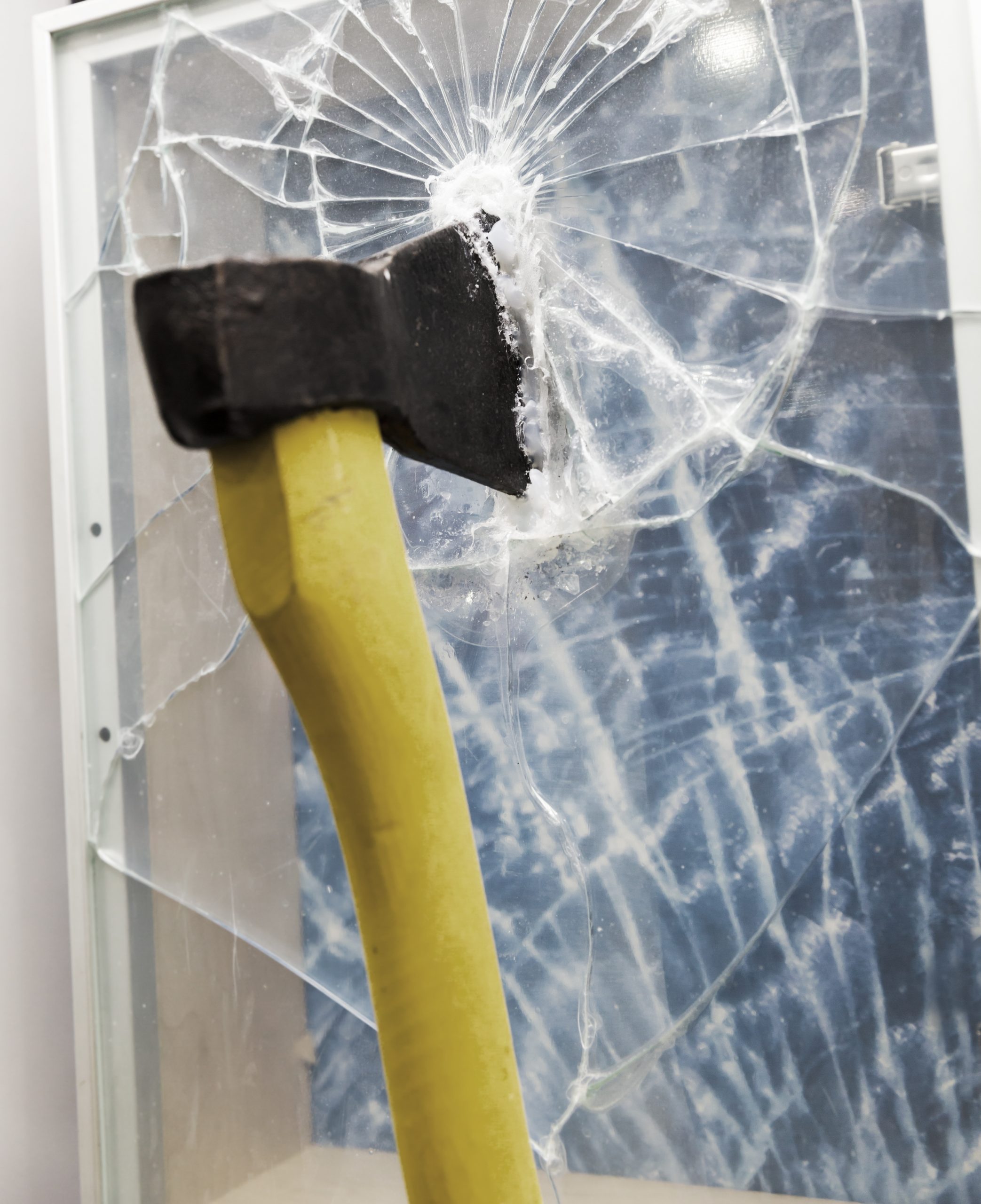
What Is “Security Glass” in Cars?
In most passenger vehicles, side and rear windows are commonly toughened (tempered) so they can break into small fragments under impact,
while windscreens are typically laminated so they remain in place and reduce the chance of full ejection or dangerous shards.
This configuration prioritises occupant safety, visibility and structural requirements.
When people search for “security glass for cars,” they are often looking for one of the following:
- Improved resistance to “smash-and-grab” type attacks
- Enhanced glazing for high-value or high-risk vehicles
- Specialist protection for VIP transport, secure fleets or sensitive operations
Automotive Security Glass vs Building Security Glass
The biggest difference is the test standard and intended threat.
Automotive glazing is engineered around vehicle regulations, crash performance and optical requirements.
Architectural security glazing is engineered around forced entry delay, manual attack resistance and containment for buildings and facilities.
For example, building security glass may be specified to:
- EN 356 (P1A to P8B) for anti-bandit / manual attack resistance
- LPS 1270 (SR1 to SR6) to simulate realistic attack tools and time durations
- Enhanced performance such as ballistic (EN 1063), blast resistance, fire resistance or acoustic reduction
When Might Enhanced Vehicle Glazing Be Considered?
Enhanced glazing solutions may be considered for specialist use cases where the vehicle is part of a wider security strategy.
This could include secure fleet vehicles operating in high-risk environments, protected transportation, or sites where vehicles must hold position at controlled access points.
In many real-world scenarios, the best security uplift comes not only from vehicle glazing, but from strengthening the built environment around vehicles:
entrance lobbies, guardhouses, cash offices, loading areas, site perimeters and access control points.
This is where certified architectural security glazing can play a critical role.
Secure Glass can be:

Enhance Security

Impact Resistant

Bullet Resistant

Blast Resistant

Fire Resistant

Acoustic
Securing Vehicle-Adjacent Areas with Tecdur
Many high-risk vehicle-related environments require certified security glazing in the surrounding infrastructure:
guardhouses, control rooms, secure receptions, loading bays, perimeters and sensitive internal zones.
With over 15 years of industry experience and extensive in-house manufacturing capability,
Tecdur delivers high-performance security glazing designed to protect people and property.
As dedicated security glass manufacturers in the UK, Tecdur can support your project with guidance on EN 356 and LPS 1270 options,
as well as enhancements such as ballistic resistance (EN 1063), fire resistance, blast performance and acoustic reduction where required.