



Understand how anti-bandit glass compares to security glass, including performance levels, testing standards and typical applications.
The terms anti-bandit glass and security glass are often used interchangeably, but they are not exactly the same.
Anti-bandit glass is a specific type of security glass, typically defined by its resistance to manual attack and its classification under recognised standards such as EN 356.
Security glass is a broader category that includes a wide range of high-performance glazing systems designed to protect against different types of threats, including impact, forced entry, ballistic attack, blast pressure and fire.
As experienced security glass manufacturers in the UK, Tecdur designs and manufactures Tecdur Secure Glass —
a high-performance laminated glass range engineered to withstand severe levels of manual attack while meeting recognised security standards.
What Is Anti-Bandit Glass?
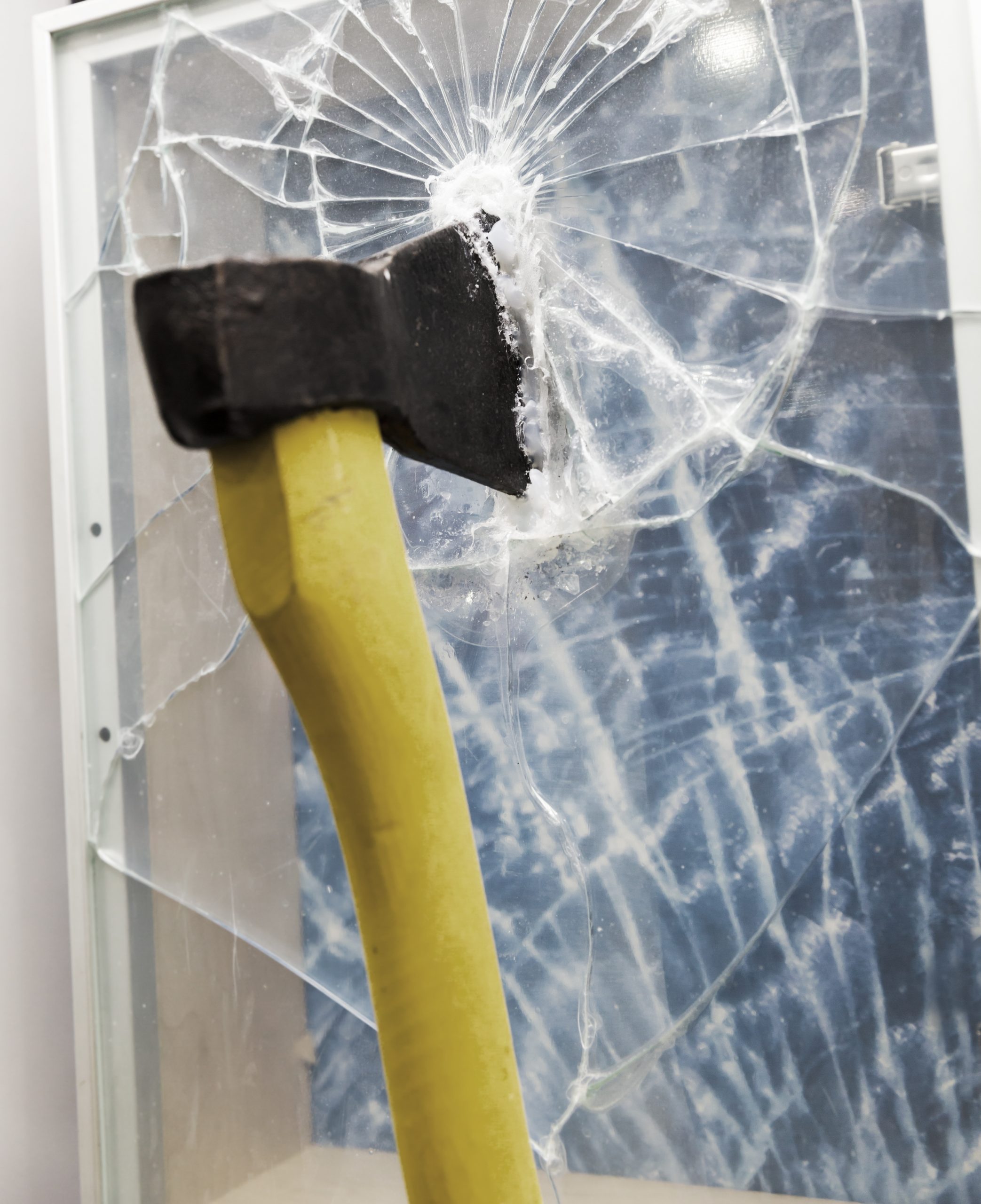
Anti-bandit glass is a form of laminated security glass specifically designed to resist deliberate attack and forced entry.
It is most commonly associated with the EN 356 standard, which classifies glass based on its resistance to manual impact.
The glass is constructed using multiple layers bonded together with strong interlayers.
This construction allows the glazing to absorb repeated impacts while remaining intact, preventing quick access through the glass.
Anti-bandit glass is often used in environments where there is a risk of vandalism or intrusion, such as retail storefronts, commercial buildings and secure facilities.
What Is Security Glass?
Security glass is a wider category that includes all types of glass designed to provide protection.
This can include laminated glass, toughened glass and specialist multi-layer glazing systems depending on the application.
Security glass may be designed to resist different types of threats, including:
- Manual attack and forced entry
- Ballistic threats (EN 1063)
- Blast pressure
- Fire exposure
- Acoustic requirements
Key Differences Between Anti-Bandit Glass and Security Glass
The main difference between anti-bandit glass and security glass lies in the scope of performance and how the terms are used in specification.
- Anti-bandit glass is a specific type of security glass focused on resisting manual attack.
- Security glass is a broader category that includes multiple types of protective glazing.
- Anti-bandit glass is typically certified to EN 356.
- Security glass may also include ballistic, blast or fire-resistant glazing systems.
- Both use laminated construction to improve strength and maintain integrity after impact.
Which One Should You Specify?
Choosing between anti-bandit glass and other forms of security glass depends on the level of risk and the type of threat the building may face.
For environments where the primary concern is vandalism or forced entry, anti-bandit glass classified to EN 356 is often the appropriate solution.
For higher-risk applications, additional performance requirements such as ballistic or blast resistance may be needed.
Correct specification should always consider the overall glazing system, including frame design, installation method and any relevant regulatory or insurance requirements.
Secure Glass can be:

Enhance Security

Impact Resistant

Bullet Resistant

Blast Resistant

Fire Resistant

Acoustic

Why Choose Tecdur?
With over 15 years of industry experience and extensive in-house manufacturing capability, Tecdur provides certified,
high-performance security glazing designed to protect people and property. Our team works closely with architects, contractors and specifiers to ensure the correct glazing specification is selected for each project.
Whether you require anti-bandit glass for impact resistance or a more advanced security glazing system, Tecdur can advise on the right solution for your application.