



What Is the Difference Between Anti-Vandal Glass and Security Glass?
Understand how anti-vandal glass compares to security glass, how each type works, and when each is typically specified.
The terms anti-vandal glass and security glass are often used interchangeably, but they can describe slightly different levels of protection. Both are types of enhanced laminated glazing designed to resist impact and delay forced entry, but the terminology often reflects the intended application and the level of performance required.
In simple terms, anti-vandal glass typically refers to glazing designed to resist deliberate damage or opportunistic attacks such as smashing, vandalism or break-ins. Security glass is a broader category that can include higher levels of protection against sustained manual attack, ballistic threats or blast resistance.
As experienced security glass manufacturers in the UK, Tecdur develops Tecdur Secure Glass — a high-performance laminated glass range engineered to withstand severe levels of manual attack while maintaining clarity and architectural integration.
What Is Anti-Vandal Glass?
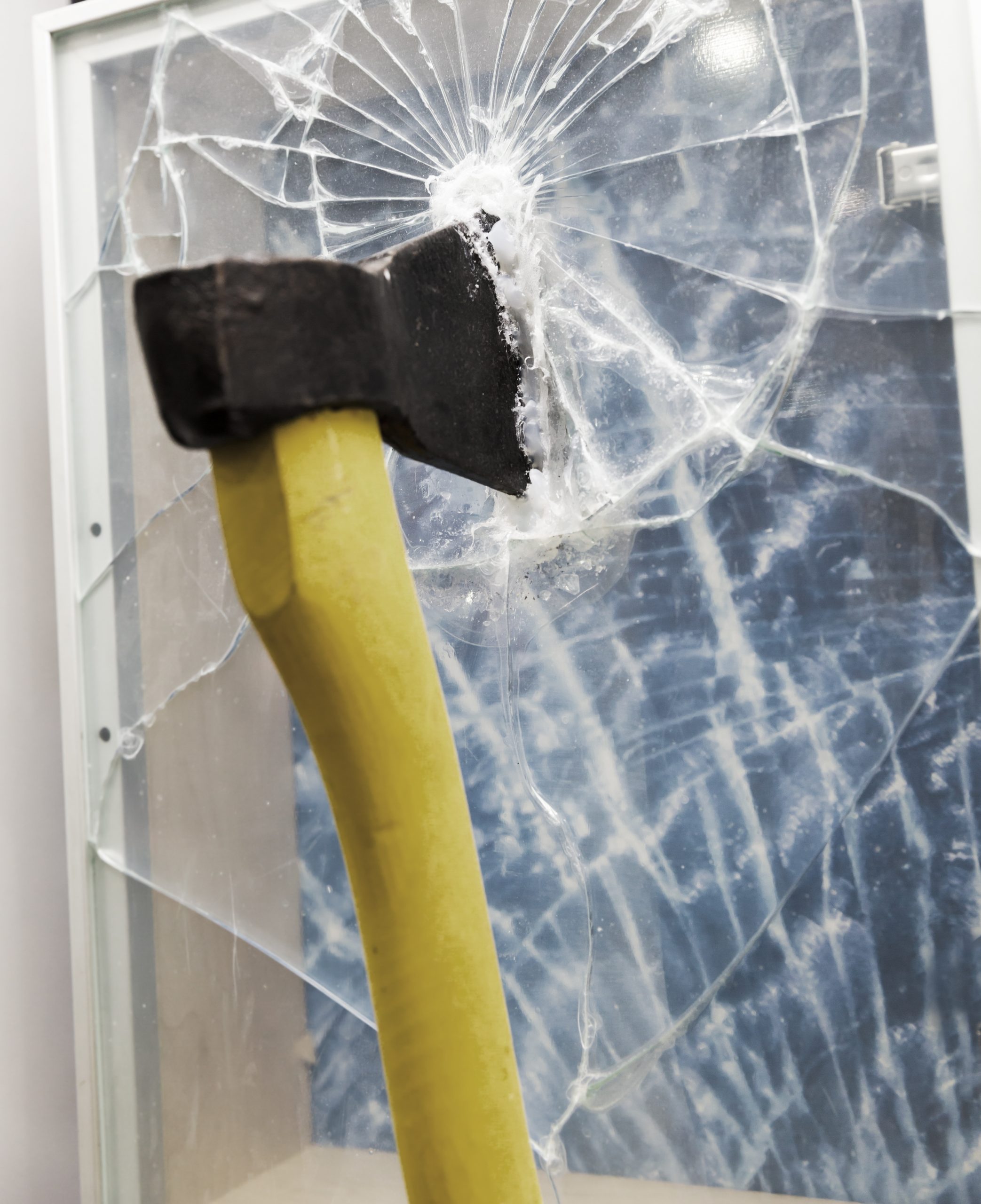
Anti-vandal glass is designed to prevent damage from deliberate impacts such as thrown objects, kicks or attempts to smash a window. It is typically manufactured using laminated glass construction, where multiple glass layers are bonded with strong interlayers.
When struck, the glass may crack but the interlayer holds the fragments together. This prevents the glass from shattering and stops an immediate opening from being created.
Anti-vandal glass is commonly used in environments where glazing may be exposed to public access or potential damage.
- Retail shopfronts
- Public transport infrastructure
- Schools and public buildings
- Commercial premises
- Urban environments with high footfall
What Is Security Glass?
Security glass is a broader category of high-performance glazing designed to resist forced entry, sustained manual attack or other threats depending on the specification. It often uses thicker laminated constructions and may be certified to recognised standards.
One of the most common standards is EN 356, which measures resistance to manual attack. Lower levels are tested using steel ball drops, while higher levels must withstand repeated axe strikes.
Key Differences Between Anti-Vandal Glass and Security Glass
While both types of glazing improve safety and resistance to breakage, the difference often comes down to the level of threat they are designed to resist.
- Anti-vandal glass focuses on resisting deliberate damage and opportunistic attacks.
- Security glass can include higher performance glazing designed to resist sustained manual attack.
- Security glass may also include additional protection such as ballistic or blast resistance.
- Both typically use laminated glass technology to maintain structural integrity when damaged.
When Should Each Be Used?
Anti-vandal glass is often sufficient where the main risk is vandalism or accidental impact. Security glass may be required where there is a higher risk of forced entry, valuable assets or sensitive environments that require certified protection levels.
Correct specification depends on the building’s risk profile, insurance requirements and the level of protection required. In many cases, architects and security consultants select glass certified to EN 356 or LPS 1270 to ensure consistent performance.
Secure Glass can be:

Enhance Security

Impact Resistant

Bullet Resistant

Blast Resistant

Fire Resistant

Acoustic

Why Choose Tecdur?
With over 15 years of industry experience and extensive in-house manufacturing capability, Tecdur delivers high-performance security glazing designed to protect people and property. Our technical team helps architects, contractors and specifiers select the correct glass performance level for each project.