



Learn how impact resistant glass thickness varies depending on security rating, laminated construction, panel size and project-specific performance requirements.
Impact resistant glass thickness depends on the level of protection required.
There is no single standard thickness for every project because impact resistant glazing can range from relatively light laminated safety glass through to high-performance certified security glass.
The correct thickness is influenced by the glass build-up, interlayer type, panel size, frame system and the level of impact or manual attack resistance needed.
For security applications, the glass should be specified according to tested performance rather than thickness alone.
As experienced security glass manufacturers in the UK, Tecdur designs and manufactures Tecdur Secure Glass —
a high-performance laminated glass range engineered to withstand severe levels of manual attack and certified to recognised standards including EN 356 and LPS 1270.
Is Impact Resistant Glass Always Thicker?
Impact resistant glass is often thicker than standard glass because it is usually manufactured from multiple layers of glass bonded with specialist interlayers.
However, thickness alone does not guarantee performance.
Two glass products can have a similar overall thickness but perform very differently depending on their laminated construction, interlayer technology and certified test results.
This is why impact resistant glass should be chosen based on tested resistance rather than appearance or thickness alone.
What Affects Impact Resistant Glass Thickness?
The required thickness of impact resistant glass is determined by several specification factors.
These include the expected threat level, building use and whether the glass needs to meet a recognised standard such as EN 356.
- Security rating – higher ratings normally require more robust laminated constructions
- Glass build-up – multiple glass layers and interlayers can increase thickness
- Panel size – larger panes may require different specifications
- Frame system – the glass must be compatible with the supporting system
- Additional performance – ballistic, blast, fire or acoustic requirements can affect thickness
Impact Resistant Glass Thickness and EN 356
EN 356 is one of the key standards used to classify impact resistant security glass.
It measures how well glazing resists impact and manual attack, with ratings from P1A to P8B.
Lower EN 356 classifications such as P1A to P5A are tested using steel ball drops and are generally used for impact resistance, vandal protection and anti-bandit glass applications.
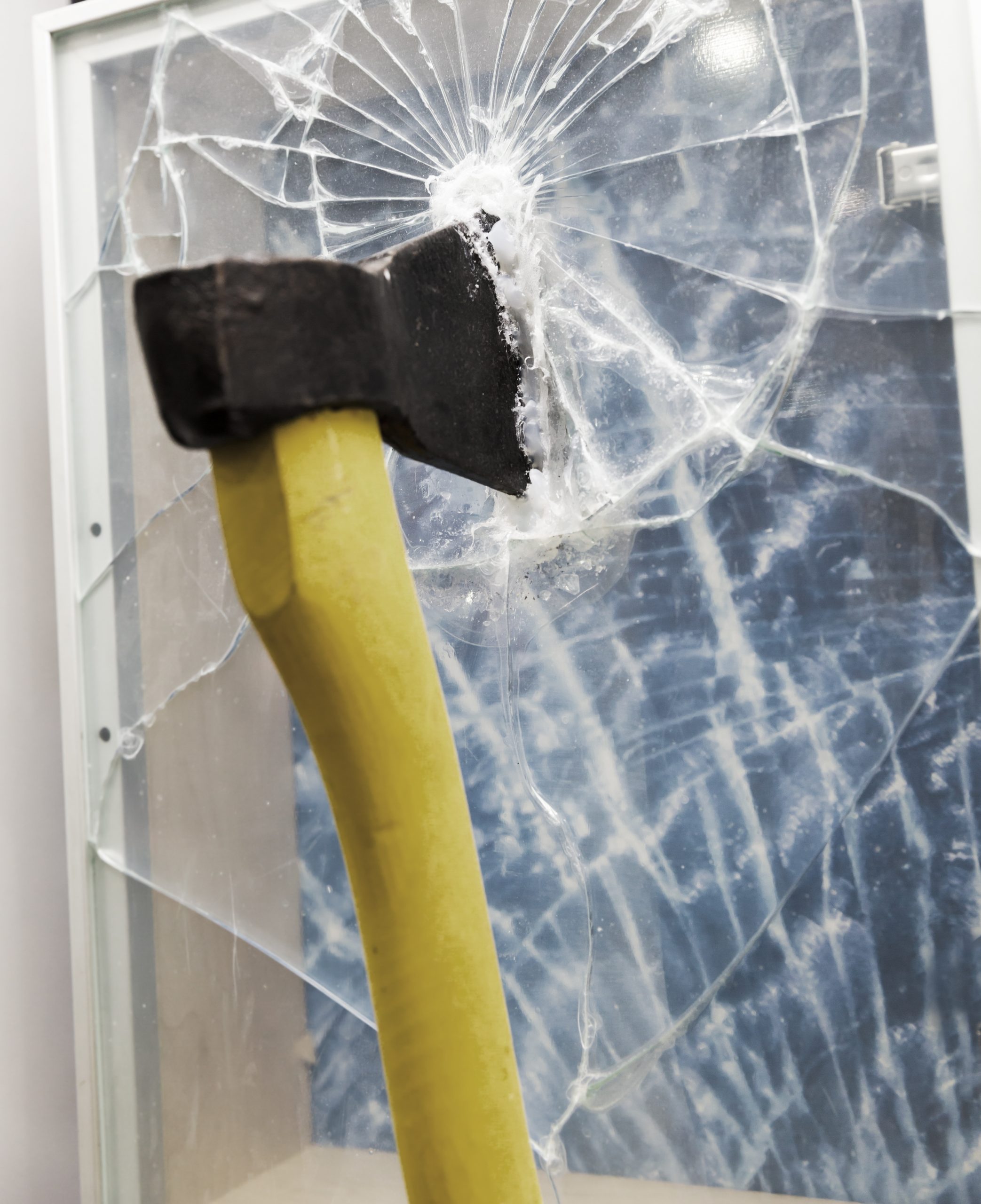
Higher classifications such as P6B to P8B are tested using repeated axe strikes and usually require more substantial laminated glass constructions.
- P1A to P5A – impact resistance tested by steel ball drop
- P6B to P8B – higher manual attack resistance tested by axe strikes
- LPS 1270 – realistic manual attack testing using defined tools and attack times
Why Thickness Alone Is Not Enough
It can be tempting to assume that thicker glass is always stronger, but security glazing performance depends on much more than thickness.
The way the glass is laminated, the interlayer material, the testing standard and the frame system all play important roles.
A properly certified thinner system may outperform a thicker product that has not been tested to the required security standard.
For this reason, the correct question is not only “how thick is the glass?”, but “what performance has the glass been tested to achieve?”.
Does the Frame Affect the Required Thickness?
Yes. Impact resistant glass must be specified as part of a complete glazing system.
The glass, frame, fixings and installation method need to work together to deliver the intended level of protection.
If the glass is too thick or heavy for the frame, it may not be suitable for the opening.
If the frame is not strong enough for the glass rating, the system may not provide the required level of security.
Can Impact Resistant Glass Thickness Increase With Extra Performance?
Impact resistant glass can be enhanced with additional performance features, and these can influence the final glass thickness and weight.
Tecdur Secure Glass can be specified with wider protective capabilities where required.
- Enhanced security performance
- Ballistic resistance to EN 1063
- Blast resistance
- Fire resistance
- Acoustic reduction
- Switchable privacy glass technology
How to Choose the Right Thickness
The right thickness should be selected after reviewing the building risk, required rating, pane size, framing system and any additional performance needs.
A lower-risk commercial application may need a different specification from a custody suite, high-value retail store or high-security facility.
Working with an experienced manufacturer helps ensure the glass is specified for tested performance, system compatibility and long-term reliability.
Secure Glass can be:

Enhanced Security

Impact Resistant

Bullet Resistant

Blast Resistant

Fire Resistant

Acoustic
Why Choose Tecdur?
With over 15 years of industry experience and extensive in-house manufacturing capability, Tecdur provides certified, high-performance security glazing designed to protect people and property.
Our team works closely with architects, contractors and specifiers to ensure the correct impact resistant glass thickness and specification is selected for each project.
Whether you require EN 356 rated impact resistance, higher manual attack resistance, additional ballistic performance or a bespoke glazing build-up, Tecdur can help specify the right tested solution.