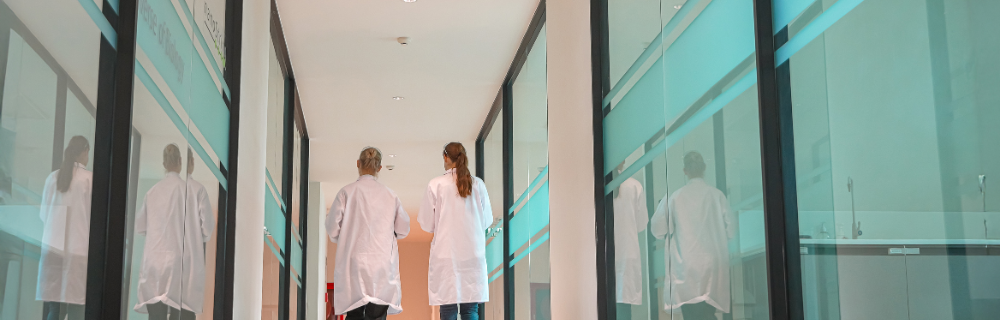


When designing modern healthcare facilities across the UK, Ireland, and global markets, balancing patient privacy with clinical observation is one of the toughest challenges project architects face. Walk into a traditional hospital ward or outpatient consultation room, and you will almost certainly find fabric cubicle curtains. For decades, these pull-around drapes served as the default solution for visual privacy. However, as NHS trusts and private healthcare providers strive to meet modern regulatory standards, the limitations of fabric dividers have become impossible to ignore. Beyond the well-documented infection control risks of hospital textiles, traditional curtains offer zero acoustic defense. In an environment where sensitive medical diagnoses, personal patient histories, and mental health discussions occur daily, fabric fails to protect speech privacy. To solve this dual challenge of visual and auditory compliance, healthcare specifiers are increasingly turning to advanced, dynamic glazing solutions like Tecdur privacy glass.
By integrating switchable smart glass into clinical partitions, consultation rooms, and ward windows, healthcare architects can deliver instantaneous visual privacy while dramatically improving acoustic attenuation to satisfy strict HBN 00-10 design benchmarks.
The Acoustic Challenge: Understanding NHS HBN 00-10 Compliance
Health Building Note 00-10 (Design for doors, windows, and structural components) sets clear parameters for physical infrastructure within NHS estates. A core component of modern healthcare compliance revolves around acoustic confidentiality—ensuring that conversations between clinicians and patients remain confidential and cannot be overheard in adjacent corridors, waiting areas, or neighboring bay beds.
Medical speech privacy isn’t just about patient comfort; it is a legal requirement under GDPR and NHS patient confidentiality charters. Overheard medical discussions can lead to severe data protection breaches, patient distress, and compromised clinical outcomes.
Traditional cubicle curtains, while providing a basic visual barrier, have a Sound Transmission Class (STC) rating near zero. Sound waves pass straight through woven fabrics, allowing private conversations to echo across busy multi-bed wards. Conversely, standard clear glass partitions reflect light and keep spaces feeling open, but force staff to rely on secondary blinds or curtains that harbour bacteria and require constant laundering.
Switchable privacy glass bridges this gap by acting as a high-performance acoustic barrier that transforms from completely clear to fully opaque at the touch of a button or wall switch.
How Switchable Glass Controls Both Light and Sound
To understand why smart glass outperforms traditional hospital dividers, it helps to examine the underlying material architecture. Tecdur’s advanced switchable glazing utilizes Polymer Dispersed Liquid Crystal (PDLC) technology embedded within an engineered, multi-layer laminated glass structure.
[Clear / Transparent State]
Electrical Current ON  ---> Liquid Crystals Align ---> Light Passes Through (Clear View)

[Opaque / Private State]
Electrical Current OFF ---> Liquid Crystals Scatter ---> Light Diffuses (Instant Opaque Privacy)
When an electrical current is applied to the PDLC interlayer, the liquid crystal molecules align, allowing light to pass directly through and making the glass completely transparent. When the current is switched off, the crystals scatter light in all directions, turning the panel instantly opaque.
The Acoustic Advantage of Laminated Composites
While the PDLC layer handles the dynamic visual privacy, the physical structure of the laminated glass delivers exceptional acoustic isolation:
-
Mass and Density: Laminated safety glass provides substantial physical mass, which naturally dampens low- and mid-frequency sound waves (such as human speech).
-
Interlayer Damping: The specialized polymer interlayers used to laminate Tecdur’s switchable panels act as acoustic buffers. These flexible interlayers absorb vibrational sound energy as it travels through the glass, preventing acoustic bridging between rooms.
-
Sealed Systems: Unlike fabric curtains or loose blinds, smart glass panels are perimeter-sealed within high-grade architectural frames. This eliminates “flanking paths”—the air gaps around curtains where sound easily escapes.
By replacing fabric dividers with custom-engineered switchable glass partitions, healthcare specifiers can easily achieve sound reduction performance of 35 dB to 42+ dB (Rw), effectively turning open-plan clinical bays into acoustically isolated consultation spaces on demand.
Infection Control Meets Acoustic Privacy
Acoustic performance in a healthcare environment cannot be evaluated in isolation; it must exist alongside strict infection prevention protocols.
Hospital-acquired infections (HAIs) remain a major operational burden for NHS trusts and private hospital groups. Traditional fabric curtains are notoriously difficult to keep sterile. They are handled constantly by clinicians, patients, and visitors, making them high-risk vectors for cross-contamination of pathogens such as MRSA, C. difficile, and Norovirus. Laundering curtains is labor-intensive, environmentally costly, and causes room downtime.
[Traditional Fabric Curtains]          [Tecdur Switchable Privacy Glass]
• Zero Acoustic Attenuation (0 dB)     • Certified Acoustic Isolation (35-42+ dB)
• High Contamination Risk (Fabric)     • Non-Porous, Easy-Clean Surface
• High Laundering & Labor Costs        • Zero Maintenance Consumables
• Blocks Natural Daylight              • Maintains Daylight Transmittance (Opaque State)
Integrating Tecdur’s smooth, non-porous privacy glass solves infection control and acoustic confidentiality in one step:
-
Instant Cleanability: Smart glass panels can be wiped down instantly using standard hospital-grade disinfectants and cleaning agents without degrading the glass surface or clouding the optical clarity.
-
Hermetically Sealed Interlayers: Because the active PDLC matrix is encapsulated between protective glass sheets, cleaning fluids and moisture can never penetrate the functional electronic layers.
-
Elimination of Downtime: Wards do not need to be locked out or stripped down for curtain laundering, keeping bed occupancy rates high and operational costs low.
Enhancing the Patient Experience in Critical Care and Consultation Wards
Beyond regulatory compliance and hygiene, the acoustic and visual environment plays a direct role in patient healing. Studies consistently show that noisy, chaotic hospital environments increase patient stress, elevate blood pressure, and contribute to sleep deprivation and ICU delirium.
Switchable privacy glass transforms the patient experience in critical care units, emergency departments, and consultation suites:
1. Maximizing Daylight Without Sacrificing Confidentiality
Even in its opaque state, high-quality switchable privacy glass allows approximately 70–80% of natural daylight to diffuse through the panel. Natural light is essential for maintaining circadian rhythms, improving mood, and speeding up recovery times. Patients retain the benefit of natural sunlight while remaining completely protected from visual intrusion and acoustic disruption.
2. Immediate Clinical Responsiveness
In emergency scenarios, every second counts. Pulling curtains around a bed takes time and creates physical obstruction for medical staff. With smart glass, nurses can switch an entire ward row from clear to opaque instantaneously via a centralized control panel, nurse station button, or integrated motion sensor.
3. Multi-Threat Security Integration
Drawing on Tecdur’s deep heritage in manufacturing ballistic, blast, and physical security glazing, our healthcare privacy glass lines can be custom-engineered to meet enhanced security requirements. In secure mental health wards, high-risk observation units, or public-facing hospital reception zones, privacy glass can be combined with high-impact laminated cores to protect staff and patients from physical attack or forced entry.
Designing for the Future of NHS Infrastructure
For healthcare project architects, estate directors, and clinical leads across the UK, Ireland, and global markets, specifying building materials is a strategic, long-term investment. While traditional fabric curtains or basic blinds may seem cheaper during initial construction, their ongoing lifecycle costs—driven by continuous laundering, replacement, elevated noise complaints, and potential infection outbreaks—make them an expensive legacy option.
Specifying switchable smart glass is a classic piece of value engineering. It delivers a permanent, multi-functional architectural asset that addresses HBN 00-10 acoustic benchmarks, elevates infection prevention standards, safeguards patient confidentiality, and modernizes the healthcare environment for decades to come.
To request technical datasheets, review acoustic test certification, or discuss custom switchable glass specifications for your next healthcare project, contact the Tecdur team today.