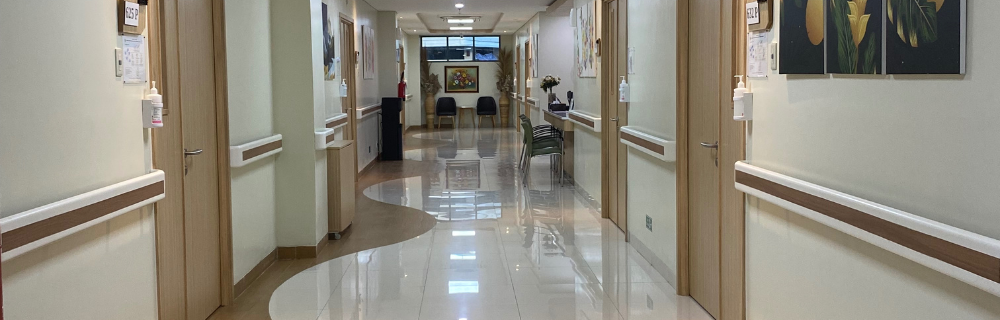



If you’re specifying for a hospital, clinic or private healthcare site, privacy glass is not just a design choice. It is a practical cost decision, especially when you compare Tecdur privacy glass with the ongoing nuisance of curtains, blinds and ad hoc privacy fixes.
Healthcare teams need more than a way to hide a room. They need patient dignity, fast switching between open and private modes, easy cleaning, stronger visual control, and a finish that still looks considered years after handover. That is why Tecdur privacy glass keeps showing up in conversations about consultation rooms, wards, recovery spaces and staff areas.
The mistake most projects make is treating privacy glazing as a premium add-on. In reality, the value often comes from what you stop buying, replacing and maintaining over the life of the building.
Why healthcare buyers care about privacy glass
In healthcare, privacy is not a nice-to-have. It affects how patients feel, how staff work, and how smoothly a space operates.
The main benefits
-
Patient dignity – people feel less exposed during consultations, treatments and recovery.
-
Better workflow – staff can move between private and open settings quickly.
-
Cleaner environments – switchable glass avoids some of the fabric-heavy surfaces that are harder to keep hygienic.
-
A lighter, calmer interior – you keep daylight and sightlines without leaving patients on display.
-
More flexible room use – one space can serve several functions across the day.
That flexibility matters in NHS settings, private hospitals and mixed-use health buildings. A room that can switch from transparent to opaque can support consultations, diagnostics, observation and family visits without needing a redesign every time the use changes.
The cost case: where privacy glass earns its keep
The strongest argument for privacy glass in healthcare is total cost of ownership. The upfront price is only part of the story.
Traditional privacy solutions can look cheaper at procurement stage, but they often create hidden costs:
-
Cleaning time for curtains, blinds and tracks
-
Replacement cycles when fabrics wear, stain or fail
-
Maintenance callouts for cords, rails and moving parts
-
Operational friction when staff have to stop and draw coverings manually
-
Refit disruption when a room needs a privacy upgrade later
By contrast, switchable privacy glass is built into the room from day one. That means the privacy function is part of the glazing, not an extra layer bolted on afterwards. For busy healthcare environments, that can translate into lower maintenance burden, fewer consumables, and less time lost to small but constant operational chores.
There is also a planning advantage. If you specify privacy glass early, you are designing for the room the building actually needs, not trying to patch privacy into a finished space later.
Why it can make more sense than blinds or curtains
Blinds and curtains are familiar, which makes them feel safe at procurement stage. But in healthcare, familiar is not always economical.
They add soft surfaces, moving parts and cleaning requirements into environments that already run under pressure. They can get damaged, look tired quickly, and create the kind of ongoing upkeep that disappears from the business case until the building is in service.
Privacy glass avoids a lot of that. It gives you:
-
Instant privacy on demand
-
A cleaner visual appearance
-
No fabric to replace
-
No cords or slats to maintain
-
A better long-term fit for high-use rooms
For architects, that matters because it helps the whole room feel more resolved. For decision-makers, it matters because the spend is easier to defend when the specification supports both user experience and operational efficiency.
Where privacy glass works best in healthcare
The best applications are the ones where privacy needs to change quickly.
Strong use cases
-
Consultation rooms
-
Examination rooms
-
Recovery areas
-
Treatment rooms
-
Multi-purpose outpatient spaces
-
Staff meeting and briefing rooms
-
Family discussion rooms
In each of these, Tecdur privacy glass gives you control without cluttering the space with extra kit. That is especially useful when the architecture has to do a lot of heavy lifting in a small footprint.
It is also worth saying that privacy glass is not just about hiding people from view. In the right setting, it helps maintain a sense of calm and control. Patients do not always want a room that feels closed off. They want a room that feels private when it needs to, and open when it does not.
The architecture case: design, hygiene and long-term value
From an architectural point of view, privacy glass solves more than one problem at once.
It helps keep a room visually clean. It supports a more minimal detailing strategy. It can contribute to a calmer patient experience. And it reduces the chance that a late-stage privacy issue becomes a messy compromise during fit-out.
That is useful in healthcare because these projects are rarely judged on one metric alone. They have to work for infection control, user experience, aesthetics, maintenance and budget. Privacy glass sits in that intersection.
If you are designing for a trust, a private provider or a public-sector scheme, the question is not simply whether privacy glass costs more than curtains. The better question is whether it reduces the number of other costs you would otherwise keep paying for.
Conclusion
For healthcare projects, privacy glass makes sense when you look beyond the line-item price. It supports dignity, helps staff work more efficiently, keeps rooms flexible, and cuts down on the hidden costs that come with disposable or mechanically fiddly privacy solutions.
If you are building or upgrading a clinical space, Tecdur privacy glass is worth considering early, before the layout is fixed and the privacy solution becomes an afterthought. That is usually where the value starts to compound.